

Producer results · Pasture & Forage · 2025–26
Pine ground. No lime. Nine points of calcium through a record drought.
Mark grazes a forage field southwest of Atlanta, including a cleared pine lane where nothing would grow. Three soil tests from the same independent lab, lined up against his orders and dated field photos. The timing lets you see which product did what.
-
Grower
Mark · West Georgia
-
Operation
Cool-season forage and grazing
-
Evidence
3 Midwest Labs soil tests · Aug 2025 to Sep 2026
+9.0pts
calcium base saturation, 62.5% to 71.5%
−8.6pts
hydrogen (acidity) on the exchange, 19.9% to 11.3%
5.8 → 6.3pH
between the August and March soil tests
0tons
of lime. One drum of Advanced-Cal at 5 gal/ac
The lane
Pine ground that wouldn't hold a stand.
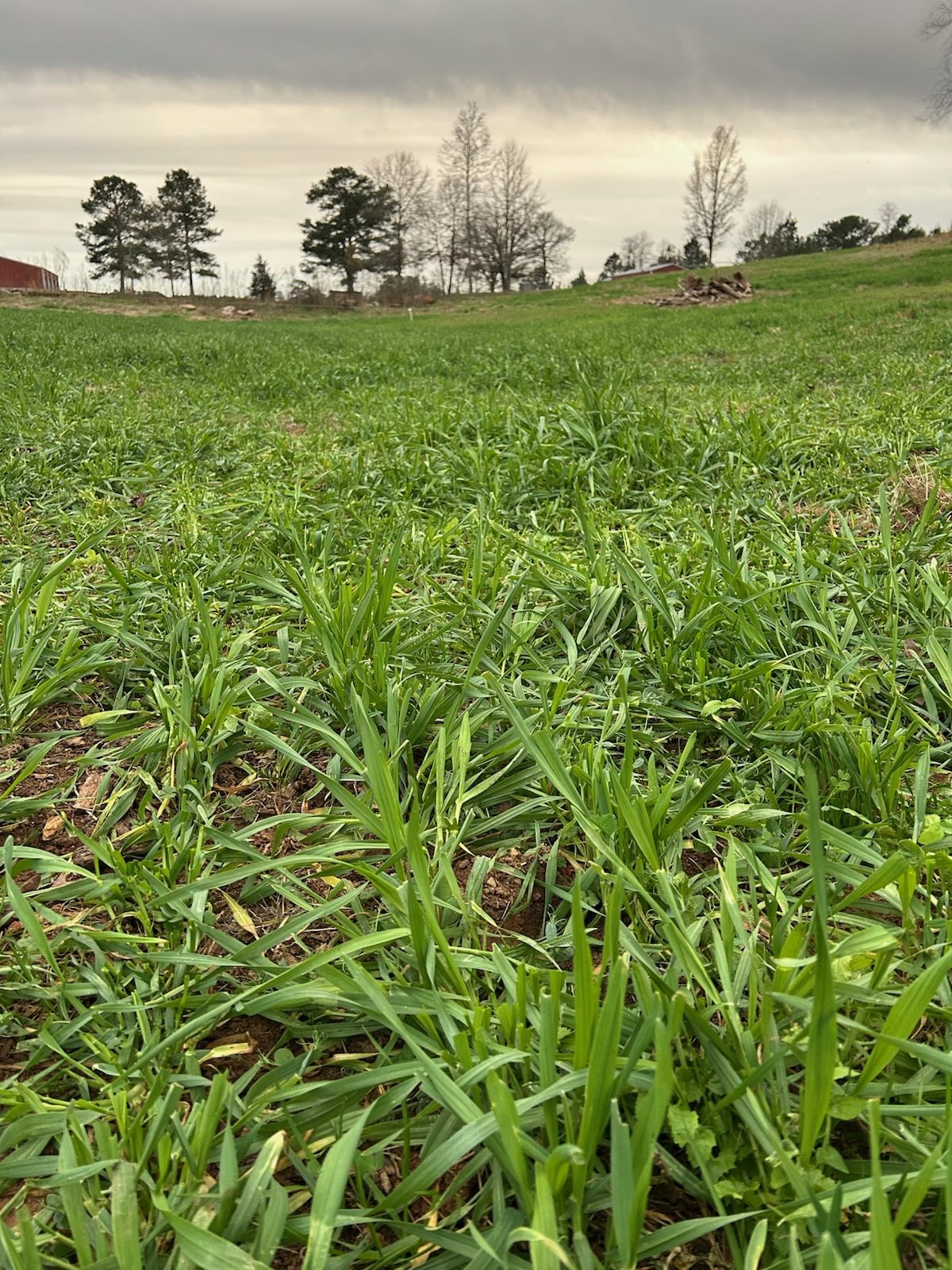
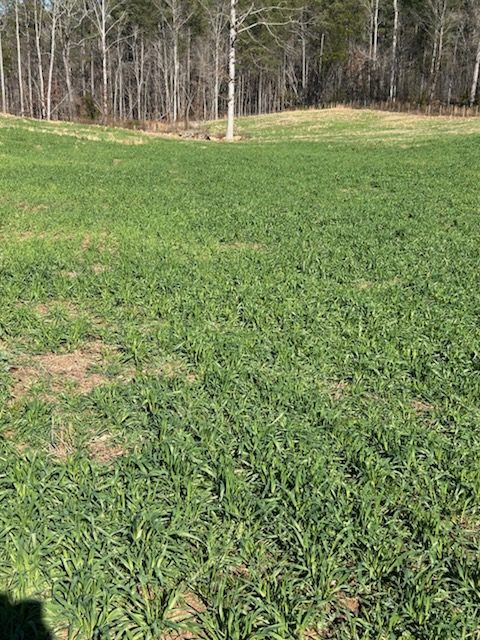
Part of Mark's field is a lane that stood in pines until it was cleared. Pine ground runs acid, and by Mark's account nothing he planted on that lane would take.
The August 2025 soil test read like it: pH 5.8, calcium holding 62.5% of the exchange against a 75% target, hydrogen on nearly a fifth of it, and phosphorus Low at 9 ppm. Cation exchange capacity sat around 6, light ground with little ability to bank what it's given.
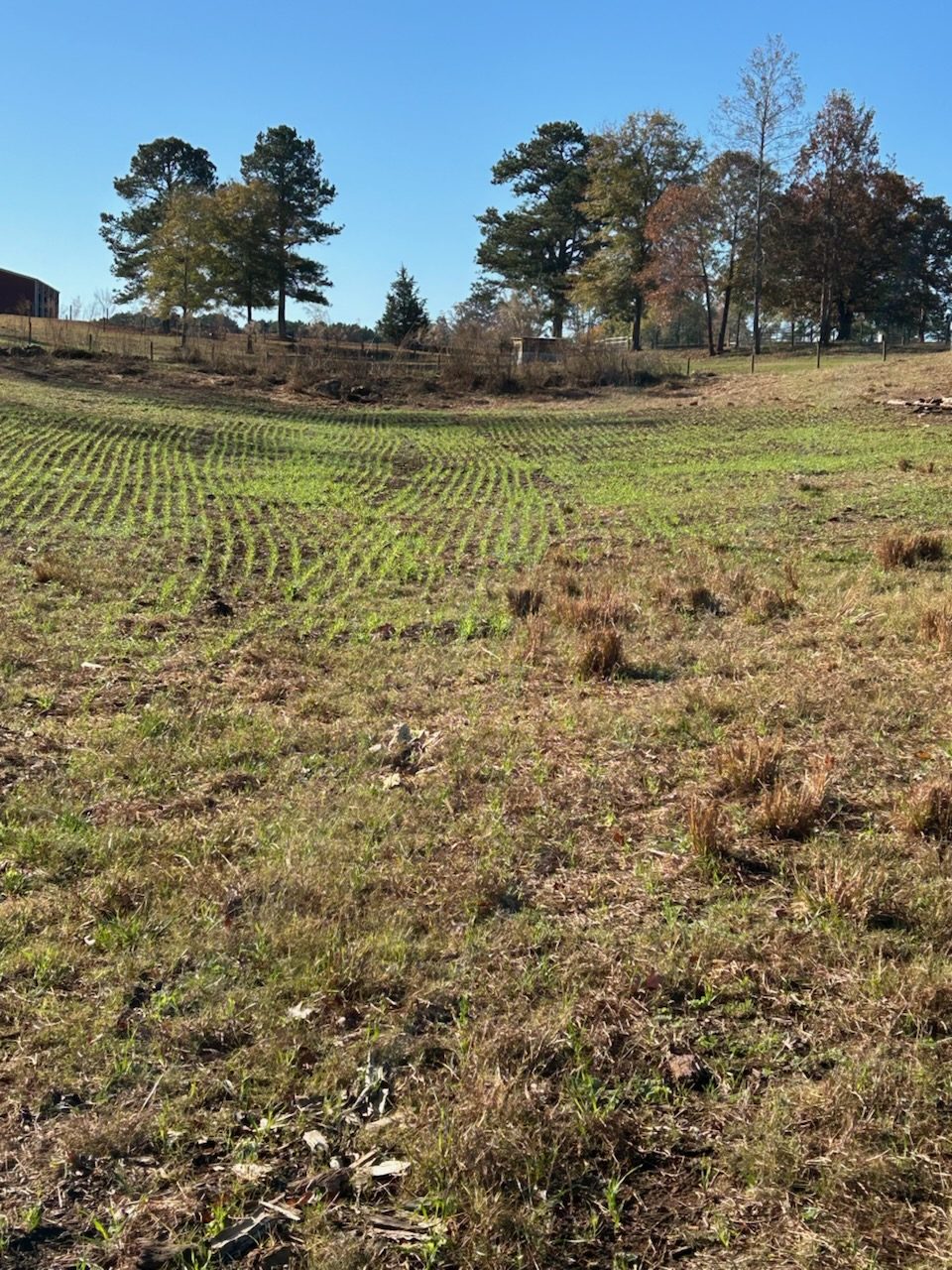
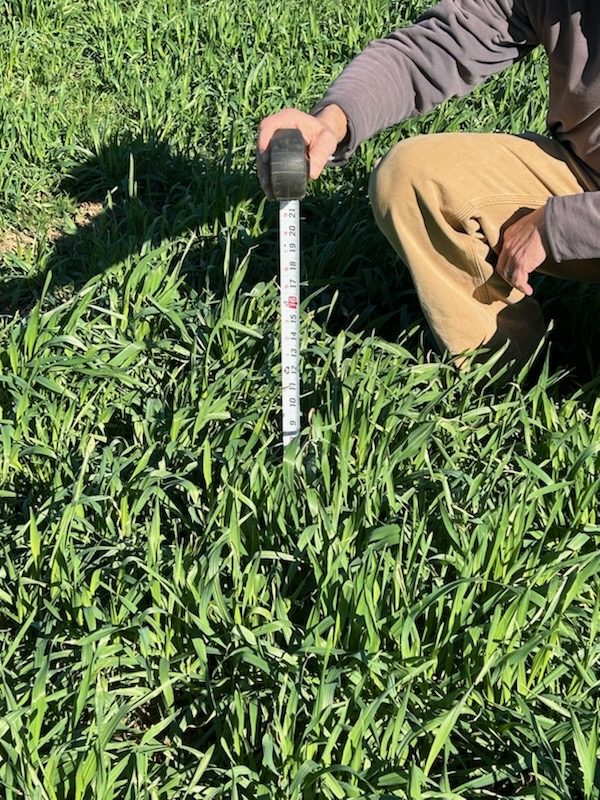
Mark drilled a cool-season grazing mix around October 10, sprayed one drum of Advanced-Cal at 5 gallons an acre about two weeks later, and followed with 3-18-18+ in late November. No lime.
Three soil tests · same lab, same field
| Measure | Aug 21, 2025 Baseline | Mar 4, 2026 After Advanced-Cal + 3-18-18+ | Sep 4, 2026 Six months, no Ca or P added |
|---|---|---|---|
| Soil pH | 5.8 | 6.3 | 6.2 |
| Calcium base saturation | 62.5% | 71.5% | 72.0% |
| Phosphorus | 9 ppm · Low | 29 ppm · High | 17 ppm |
| Sulfur | 20 ppm · High | 10 ppm · Low | 13 ppm · Medium |
Midwest Laboratories, Omaha NE. Low / Medium / High ratings are the lab's own. Between the first two tests hydrogen saturation fell from 19.9% to 11.3% as calcium took its place.
The ledger · every pass against every test
-
Feb 26, 2025
Nitro-Maxx+ · 55-gal drum · 5 gal/ac
Ordered
-
May 26, 2025
Nitro-Maxx+ · 55-gal drum · 5 gal/ac
Ordered
-
Aug 21, 2025
Soil test 1: pH 5.8 · Ca 62.5% · P 9 ppm
-
~Oct 10, 2025
Cool-season grazing mix drilled
-
~Oct 23, 2025
Advanced-Cal · one 55-gal drum · 5 gal/ac
On the ground three weeks before the Nov 13 photo
-
~Nov 20, 2025
3-18-18+ · one 55-gal drum · 5 gal/ac
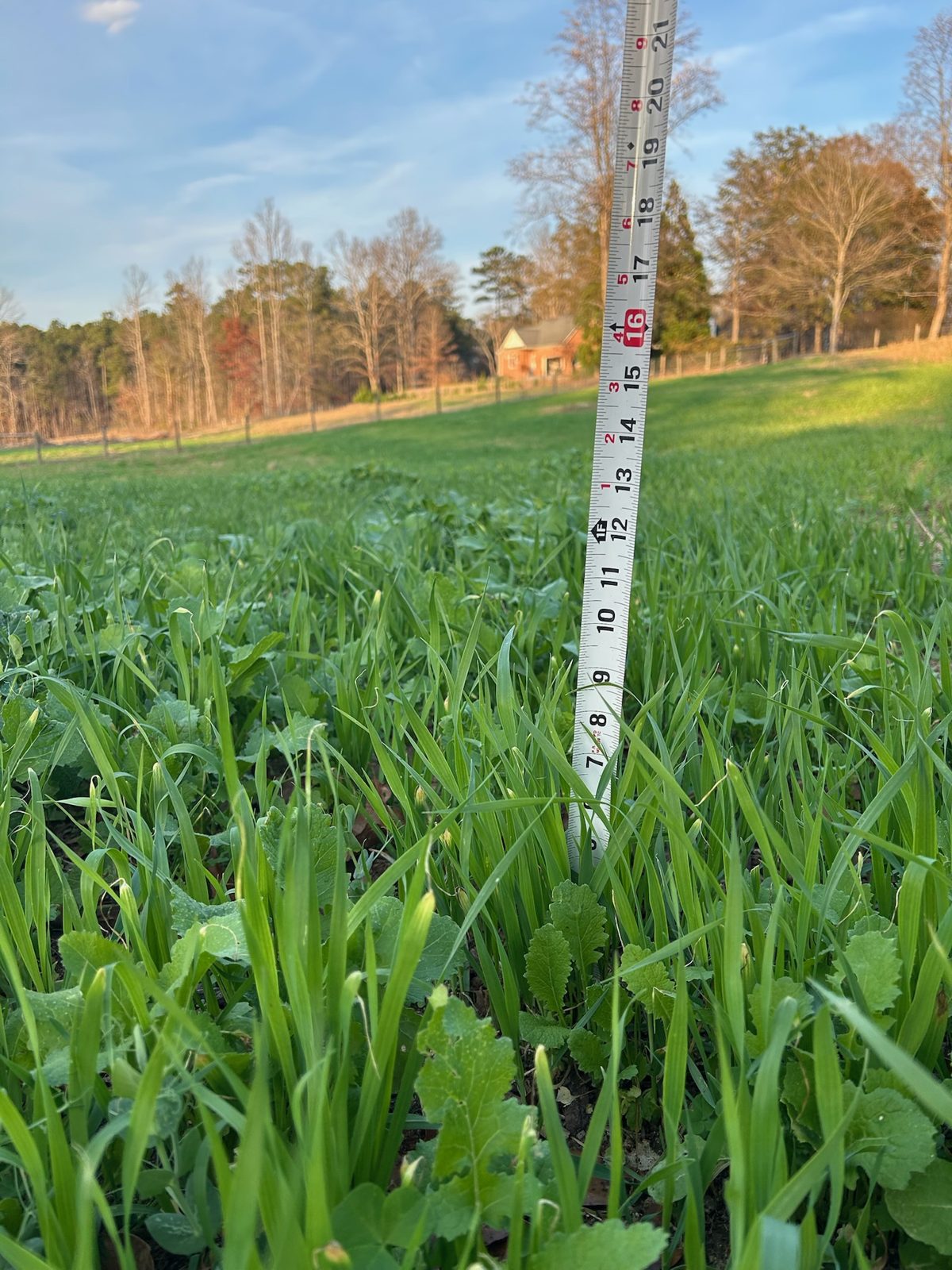
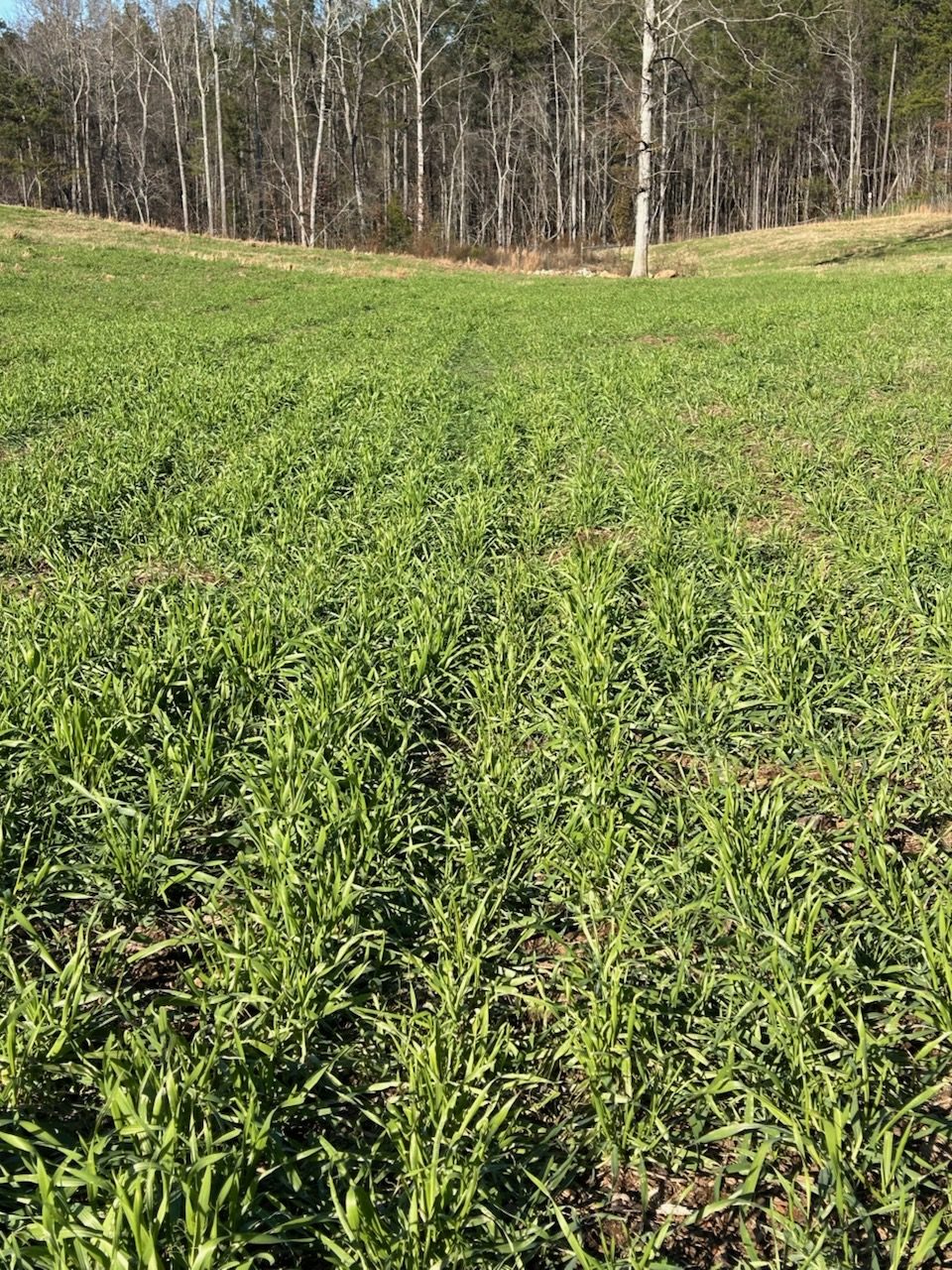
On the ground three weeks before the Dec 11 photo
-
Mar 4, 2026
Soil test 2: pH 6.3 · Ca 71.5% · P 29 ppm · S 10 ppm Low
-
Mar 11, 2026
Pro-Sul · 55-gal drum · 5 gal/ac
Ordered seven days after the test flagged sulfur
-
May 13, 2026
Nitro-Maxx+ drum + YieldMaker · 5 gal/ac
Ordered. Still no calcium, still no phosphorus
-
Sep 4, 2026
Soil test 3: pH 6.2 · Ca 72.0% · P 17 ppm · S 13 ppm
Window one · August 2025 to March 2026
Nine points of calcium in one dry winter.
Between the August and March tests, calcium base saturation rose 9.0 points while hydrogen fell 8.6. Soil pH wanders for all kinds of reasons: sampling depth, moisture at the pull, what the crop was doing. The makeup of the exchange doesn't wander that way. Nine points of calcium displacing eight and a half points of acidity is a chemical exchange, and something had to put that calcium there.
The only calcium that went on this field in that window was one drum of Advanced-Cal, sprayed in late October, about 19 weeks before the March test. Phosphorus climbed from 9 to 29 ppm behind the 3-18-18+ in the same stretch.
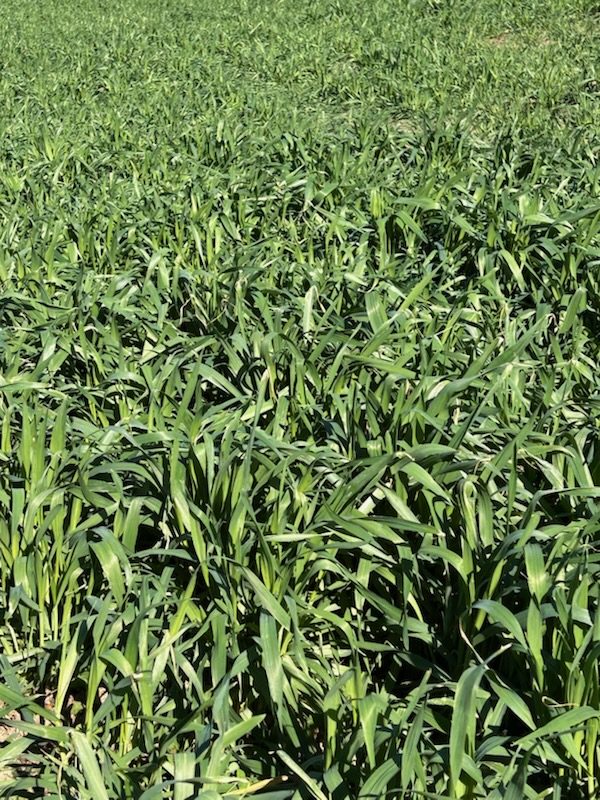
The stand, November to January
Window two · March to September 2026
Six months with nothing added. The calcium held.
After the March test Mark ordered Pro-Sul and Nitro-Maxx+ with YieldMaker, and no calcium and no phosphorus. That turns the next six months into an unplanned control, and each reading lands where the chemistry says it should.
The phosphorus line is the one to show a neighbor. It climbed to 29 when the 3-18-18+ went out, then slid to 17 in a single season with nothing applied. On ground this light there's no bank behind the number, so phosphorus is an every-year conversation.
The sulfur line shows what a soil test is for. March flagged it Low at 10 ppm, Pro-Sul was ordered a week later, and September read 13, back in the Medium band.
| Nutrient | Applied | Mar → Sep | Result |
|---|---|---|---|
| Calcium | None | 71.5% → 72.0% | Held |
| Phosphorus | None | 29 ppm → 17 ppm | Fell back 41% |
| Sulfur | Pro-Sul, March | 10 ppm Low → 13 ppm Medium | Recovered |
Six months with no calcium applied, and calcium saturation didn't slip. That isn't a claim about residual. It's a measurement of it.
The weather
All of it happened inside a record drought.
Dry lime has to dissolve before it does anything, and dissolving takes water. From the week that drum went on until August 2026, this field sat inside a drought that set records going back to 1895.
Sources: NWS Peachtree City drought information statements; U.S. Drought Monitor; Drought.gov Southeast drought status update, April 16, 2026; Georgia EPD.
-
Sep 23, 2025
NWS Peachtree City dates the start of the drought episode to this week, a month before the Advanced-Cal went on.
-
~Oct 23, 2025
One drum of Advanced-Cal goes on at 5 gallons an acre, into dry ground. No lime.
-
Sep 2025 – Mar 2026
Georgia, North Carolina and South Carolina each post record dry conditions for September through March, in records going back to 1895. The winter recharge never comes.
-
Mar 4, 2026
Soil test 2 comes back: calcium saturation up 9 points, pH 6.3.
-
Apr 27, 2026
Georgia EPD declares a statewide Level 1 drought response.
-
Apr 28, 2026
For the first time since the U.S. Drought Monitor began in 2000, all of Georgia is in severe drought or worse at the same time.
-
Aug 6, 2026
NWS Peachtree City issues its final drought statement for the episode.
-
Sep 4, 2026
Soil test 3: calcium saturation holds at 72.0% with nothing added.
Where it stands · fall 2026
Told to stop buying calcium.
At 72% calcium saturation and pH 6.2 there's nothing left to correct, so our recommendation to Mark is to hold and watch rather than spend another dollar on calcium.
What the field still needs is phosphorus, because its own soil tests proved phosphorus won't stay put on that ground. Going into fall 2026 Mark is drilling triticale, winter peas, crimson and white clover, turnips and radish, with 10-20-10+ at 4 gallons an acre at drilling.
Nineteen months took this field from acid, calcium-short and phosphorus-short to a soil whose only remaining deficiency is boron.
The honest limits
What this is, and what it isn't.
We'd rather tell you the limits than have you find them.
- There is no untreated check strip. The whole field got the program. The March to September stretch works as an unplanned control for calcium and phosphorus, but it wasn't designed as one.
- One farm, one field. A documented case study, not a replicated trial with statistical significance.
- No yield claim. Nothing was weighed. What's measured here is soil chemistry from an independent lab, and that's all we're claiming.
- The field wasn't untouched before the baseline. Two drums of Nitro-Maxx+, which carries 4% calcium, were ordered in February and May 2025. They're already in the August numbers.
- Dry weather cuts both ways. Less rain also means less leaching, so what was applied stayed put more easily than it would in a wet year.
- Field timing comes from photos. Drilling, Advanced-Cal and 3-18-18+ dates are worked back from Mark's dated field photos. Every other date is an order date from AgriTec sales records.
What isn't in question: the order records, the photo dates, the sample dates, the lab, the numbers on the reports, and that not one ton of lime went on this field.
The takeaway
Waiting on rain to put lime out? Mark didn't wait.
Low pH, short on calcium, and a stretch of pine ground that wouldn't grow anything. It started where every AgriTec program starts: a soil test, and an agronomist reading every number on it.
Results shown are from a single field as measured by an independent soil lab; individual results vary with soil, weather, and management. Last name and exact location withheld.