

Producer results · Hay & Forage · 2026
A first season on liquid: 3.19 tons per acre.
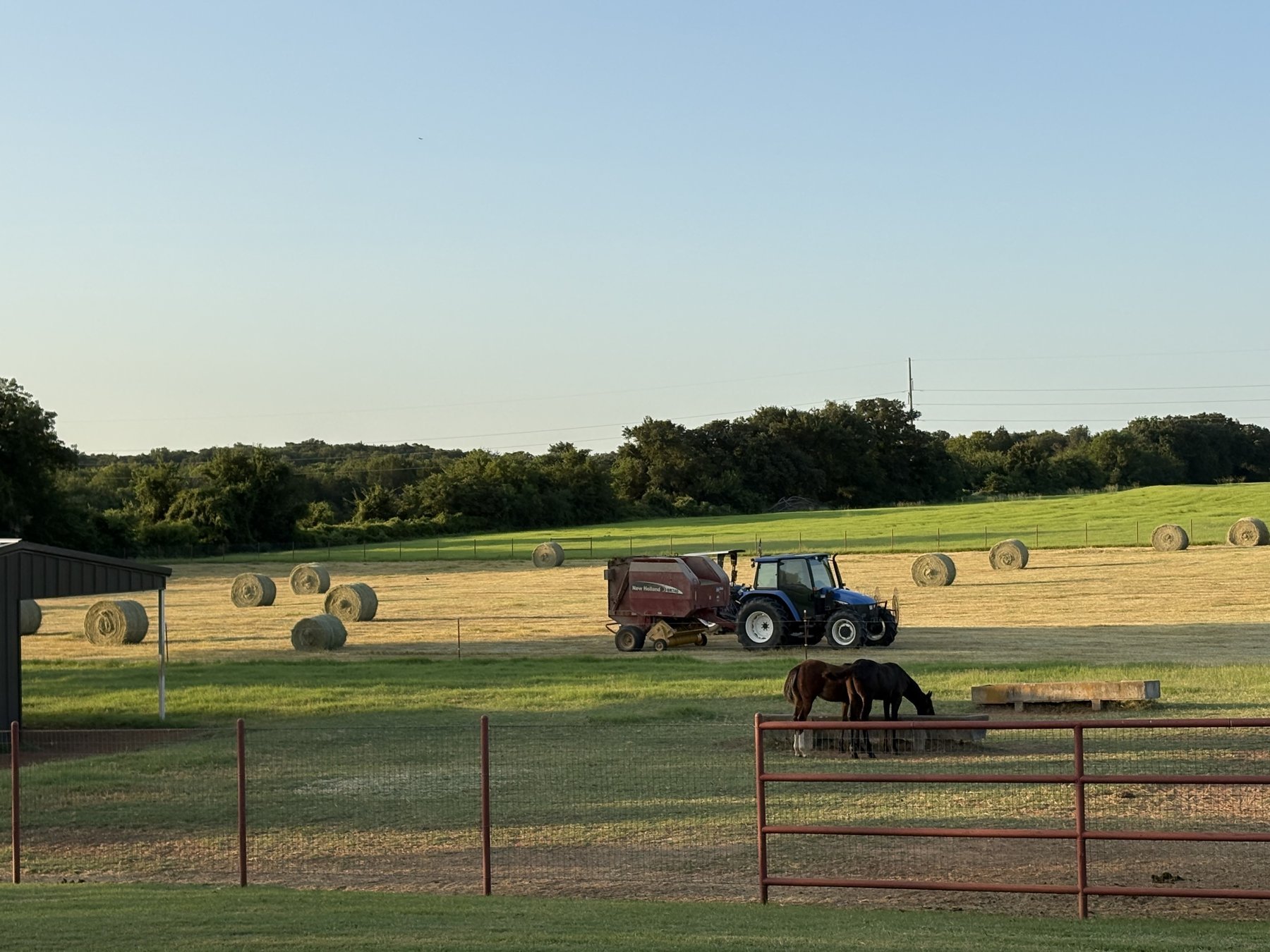
After 25+ years on a traditional dry fertility program, a hybrid Bermuda grass hay producer near Whitesboro, Texas put his first field on AgriTec liquid nutrition, and out-baled the dry program next door 7.5 to 1.7 an acre.
-
Operation
Hybrid Bermuda hay producer
-
Region
Whitesboro, Texas
-
Season
2026 · first year on liquid
Producer results · Whitesboro, Texas · 2026
"I have never baled so much hay off of my fields and even outdid my neighbors who have 5x more acreage than I do."
Hybrid Bermuda hay producer · first season on AgriTec liquid
After 25+ years on a traditional dry fertility program, he put his first field on AgriTec liquid nutrition in 2026. The first cutting came in 59% over his own long-term average, and about 4.5 times the forage per acre of a neighboring field cut the same season on urea and potash.
Bale for bale · first cutting 2026 · per acre
AgriTec liquid program
7.5
Dry program next door
1.7
4.5x
the forage per acre, same neighborhood, same season.
Every circle is one 850 lb round bale.
6,375lb/ac
first cutting, weighed off the field July 8
3.19t/ac
vs his 2.0 ton per acre 25-year average
+59%
over the long-term dry-program baseline
22bales
4x5 rounds at roughly 850 lb each
Same season, same neighborhood · first cutting 2026
lb of forage per acre
Neighboring field · dry program, urea + potash at 100 lb/ac each
~1,417 lb/ac · 1.7 bales
The test field · AgriTec liquid program
6,375 lb/ac · 7.5 bales
4.5x the forage per acre, cut the same season a few fields apart.
The producer
Twenty-five years of dry fertility, and a healthy dose of skepticism.
He has grown hybrid Bermuda hay in the Whitesboro area for more than 25 years on the same program most of his neighbors run: urea and potash at roughly 150 lb/acre of each, ag lime, and the occasional litter or manure. On that program his fields averaged 2 tons of forage per acre per cutting, year in and year out.
He was not an easy sell. He'd heard the claims made for liquid fertilizers from plenty of companies and was openly skeptical the production numbers were real. What he did have was a tremendous amount of spray experience, the equipment to apply liquids precisely, and a brand-new piece of ground to prove it on: a property acquired in late 2025 that had never been under his management. That new field became the test.
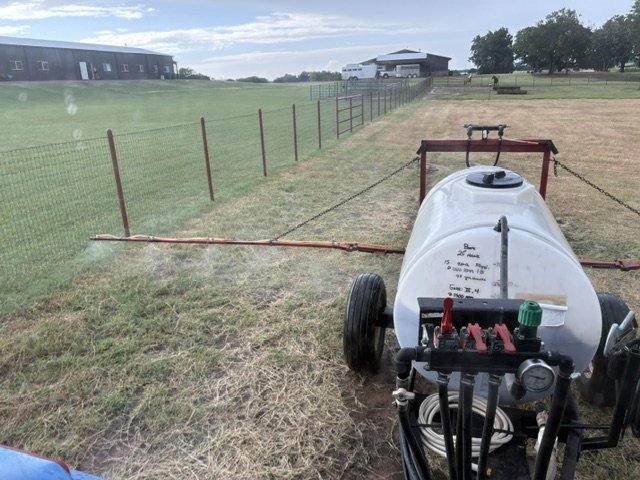
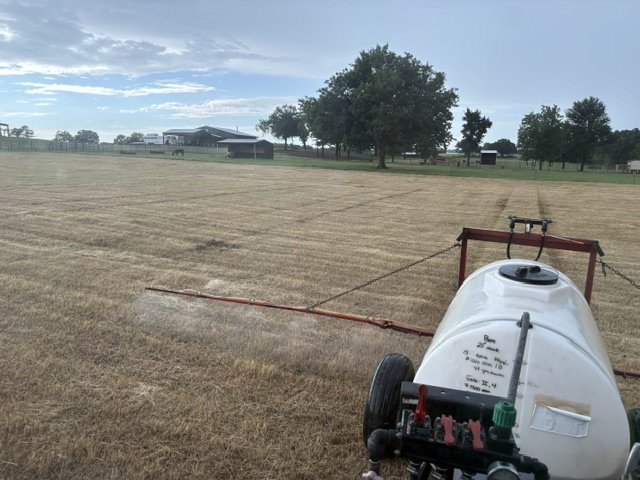
In spring 2026 he put it on a full AgriTec liquid program, his first season ever on liquid fertility. Every pass went out through his own pull-type sprayer, on his own schedule, at the exact rate each pass called for. No waiting on a spreader truck, no compromise blends. He singled that flexibility out as one of the biggest advantages of the whole program.
Where every program starts · the soil test
| Measure | Field | Target | Status |
|---|---|---|---|
| Soil pH | 6.4 | 6.0 – 6.5 | GOOD |
| Potassium (K) | 278 lb/ac | 300+ lb/ac | WATCH |
| CEC | 12 | 10 – 20 | OK |
| Ca base saturation | 76% | 60 – 75% | OK |
Independent soil lab, sampled late 2025 on the newly acquired property. Potassium is the number to watch on a hay field: every ton of Bermuda hay hauls roughly 50 lb of K₂O off with the bales, which is why the program leans on 3-18-18+ to feed K back through the season. The plan: soluble calcium early, a P-K foundation ahead of green-up, then nitrogen timed to push growth.
The season, application by application
-
April 6
Advanced-Cal · 4 gpa
Soluble calcium to support rooting and soil structure as the stand wakes up
-
April 8
3-18-18+ · 6 gpa
Phosphorus and potassium foundation ahead of green-up, feeding the K that hay removal takes
-
April 25
Nitro-Maxx+ · 7 gpa
Nitrogen to drive leaf growth and tillering into the first production window
-
May 15
Rotary mow to 4"
Reset a stand stalled by a cold, wet spring so it restarts clean
-
May 19
3-18-18+ · 10 gpa
Rebuild the P-K foundation under the new flush of growth
-
May 21
Nitro-Maxx+ · 10 gpa
Push regrowth hard into the summer production window
-
July 8
First cutting
6,375 lb/ac weighed. 22 four-by-five rounds off the test field
-
July 13
Nitro-Maxx+ 6 gpa · 3-18-18+ 4 gpa
Fed again five days after baling. The second cutting is already growing
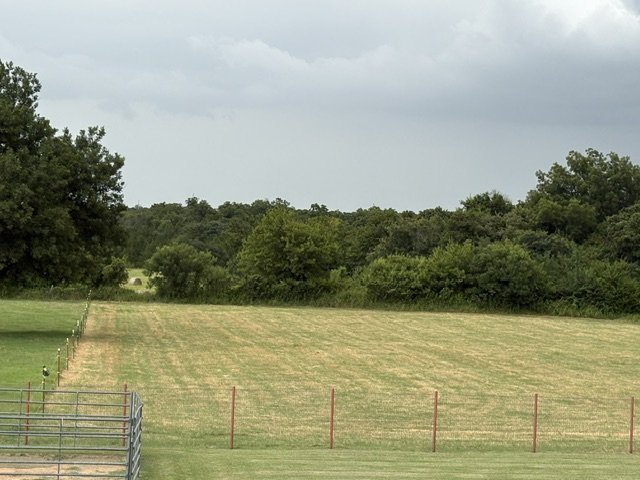
The season in pictures
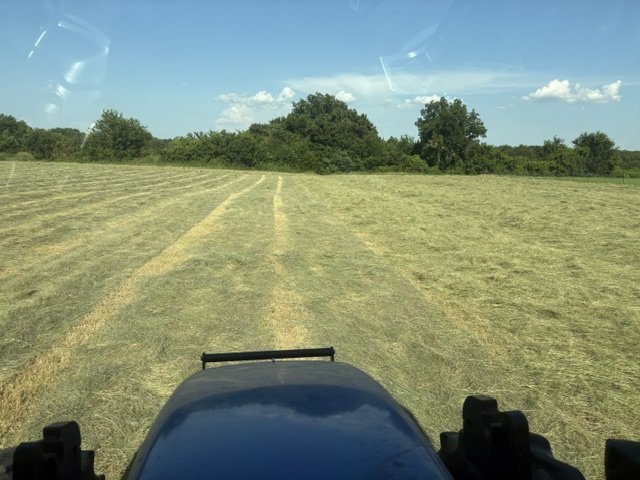
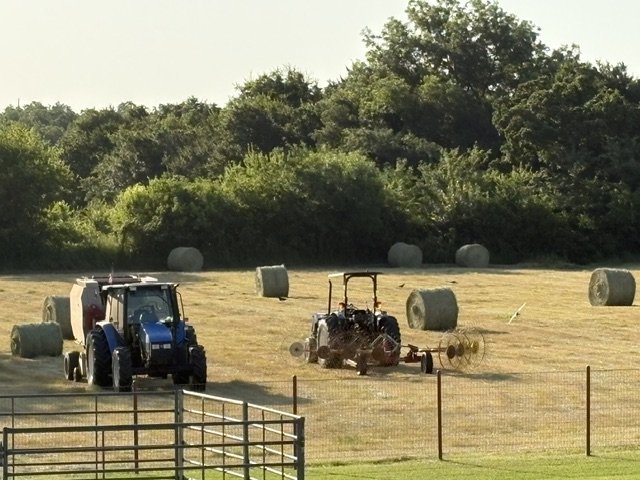
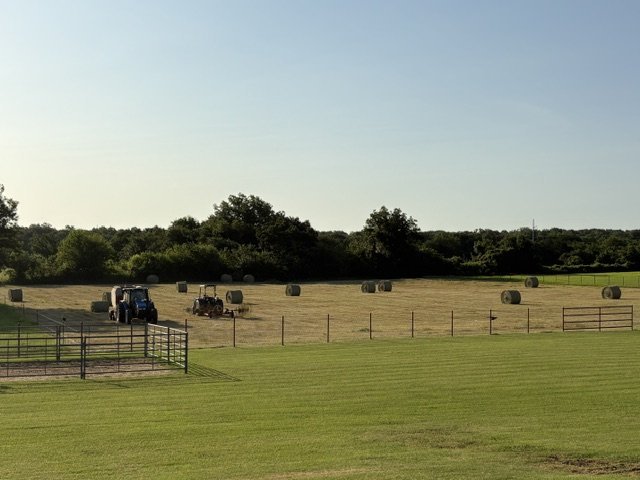
Harvest · July 8, 2026
"The rake could only take half a swath."
The stand was so thick the equipment told the story before the scale did: the rake could only pull half a swath at a time, because a full swath would plug trying to build windrows for the baler. The forage was heavy enough that he broke the belt lacing on one of the baler belts working through it. In 25 years of making hay, that's not a problem this field had ever given him.
His verdict after one cutting: he will continue to use AgriTec for all of his fertility needs going forward. The performance won him over once the weather turned, but it's the flexibility and the agronomic support he talks about when he tells the story.
The economics
2.7 cents of fertility per pound of forage. $22.69 per bale.
$170.16
Total fertility per acre
$104.70 Nitro-Maxx+ · $65.46 3-18-18+, exactly as applied and priced
2.7¢
Fertility per pound of forage
$170.16 across 6,375 lb, about $53 per ton
7.5
Bales per acre
vs about 4.7 bales at his old 2 ton average
$22.69
Fertility per bale
in a bale selling for $65 to $80 at current Texas market prices
Read it either way, it works: every bale carries $22.69 of fertility and sells in the $65 to $80 range, so the fertility bill is roughly 30 cents of every hay dollar. And at his old 2 ton average this acre made about 4.7 bales; on the liquid program it made 7.5, nearly three more bales per acre worth $180 to $225 at today's market, grown for $170.16 of total fertility on the whole acre. Market basis: USDA AMS Texas Direct Hay Report, Aug 7, 2026, "Good" grade Bermuda large rounds. Advanced-Cal establishment pass not included in the feeding-cost figures.
Forage quality · the honest numbers
| Measure | This cut | Target |
|---|---|---|
| Dry Matter Cured and baled right, no moisture concerns in storage | 87% | 85 – 90% |
| Crude Protein Slightly under target. Protein drops as a stand over-matures | 9% | 10 – 14% |
| ADF More fiber, less digestible. The signature of a late cut | 39% | < 35% |
| TDN Adequate energy for lactating and dry cattle | 58% | 58 – 62% |
Solid cattle hay, with room to improve on timing.
We report quality the same way we report tonnage: as tested. The field was actually ready 7 to 10 days earlier, but rain and scheduling pushed the cutting to July 8, and Bermuda loses digestibility and protein fast once it goes stemmy. This analysis shows exactly that pattern, and this hay is still more than adequate for lactating and dry cattle.
The fix isn't a product, it's a calendar. Cut the same stand 7 to 10 days earlier and the protein comes up, the ADF comes down, and the tonnage barely moves. That's precisely the adjustment planned for the second cutting: keep the tonnage, raise the quality numbers.
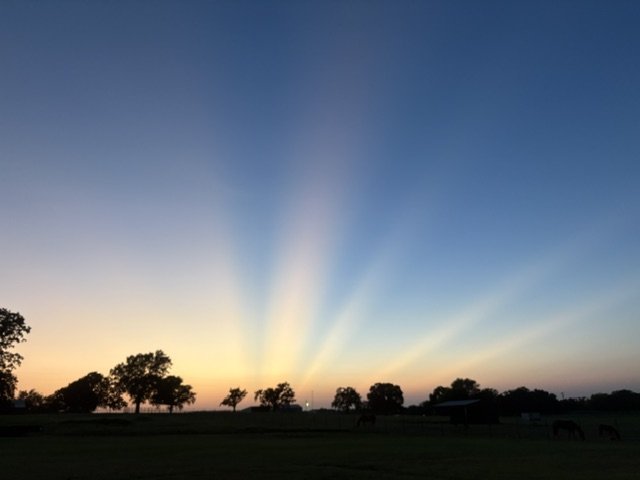
The full booklet
Evening on the Whitesboro place. The second cutting is already on its way.
The complete 11-page producer results booklet, with the soil test, every application, harvest photos, the forage analysis, and the economics, application by application.
Results shown are from a single field and single season as reported by the producer; individual results vary with soil, weather, and management. Producer identity withheld by request.
The takeaway
Your soil has a story too. Let's read it.
One field, one season, one skeptical producer, and a first cutting 59% over his 25-year average through a spring that did him no favors. It started the same place every AgriTec program starts: a soil test, and an agronomist reading it. We find the problem first. The products are simply how we fix it.