

Free agronomy on every program · John Deere Financial & AgQuest financing available

Case study · Peanut

Peanuts live or die on calcium in the pegging zone. Keep exchangeable Ca available through pod fill and defend the pegs with boron.

  • Region Southeast peanut belt · Auburn University trial protocol
  • Scope Peanut acres · pegging-zone calcium read
  • Outcome Auburn University trial · 3,800 lb/ac control → 4,900 lb/ac full program (+29%)

The numbers behind it

The peanut trial that proves it works.

Auburn University · 2023. Full results in Peanut Production Catalog 2024-2025.

YIELD LIFT

+0%

vs control plot

BEST PLOT

0 lb/ac

Full program

TREATMENTS

0

all outperformed control

CONTROL

0 lb/ac

Control

Auburn peanut trial: Ca-led program documented above-average pod count.

01

The local challenge

Peanut yield is written in the pegging zone. The peg draws calcium directly from the soil around it, not from the leaf, so exchangeable Ca has to stay above roughly 500 ppm and base saturation in the 65–75% band right through pod fill. Miss that window and you get pops, unfilled pods, and a light wagon.

Boron is the second lever. Peanuts respond strongly to foliar B from flowering through pod set; short boron shows up as poor pegging and hollow-heart. Sulfur rounds it out by driving the oil and protein that grade the kernel.
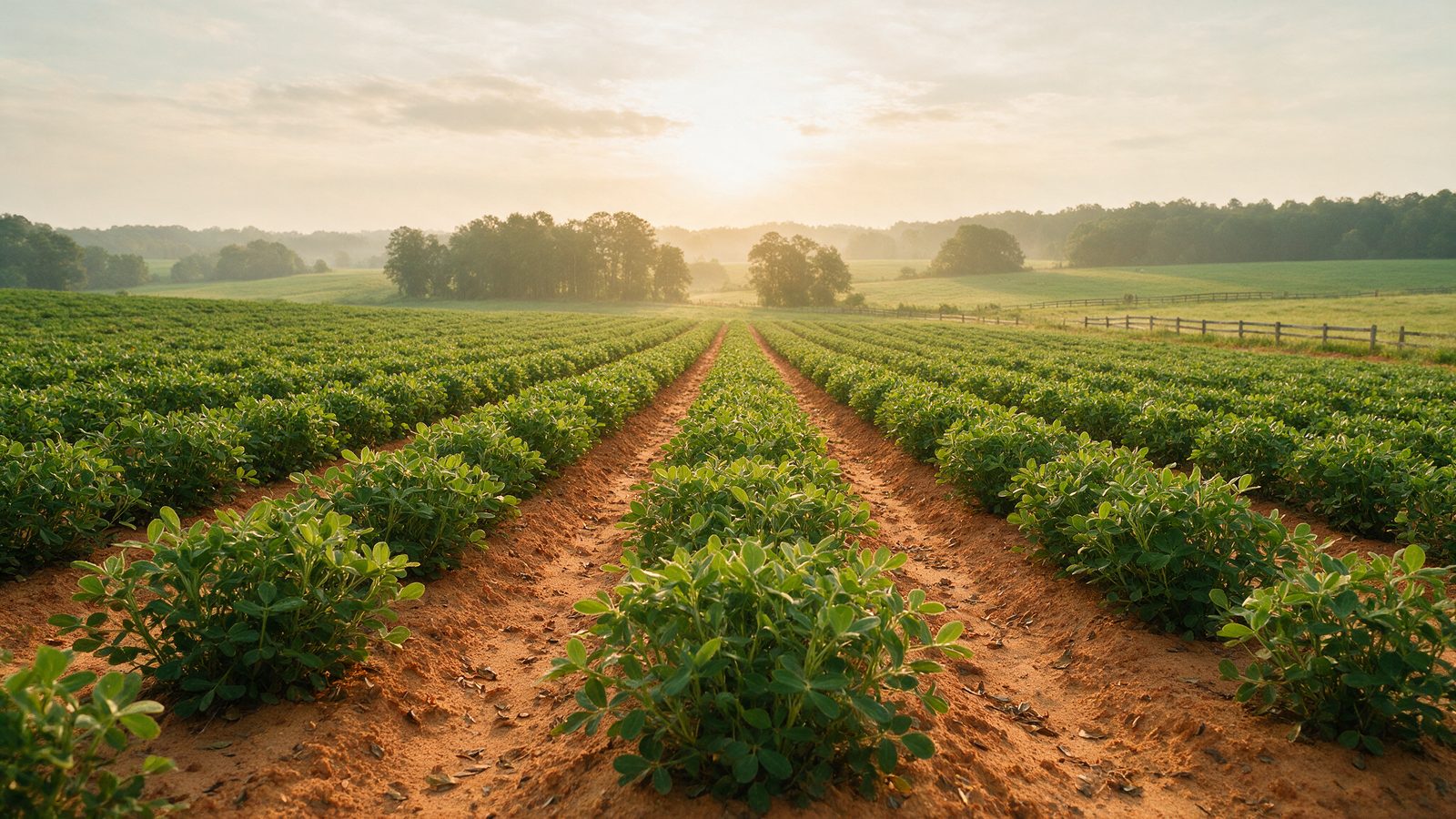

Peanut rows in sandy Southeast soil

02

What Auburn documented

AgriTec partnered with Auburn University on documented peanut trials of the calcium-led program. The untreated control made 3,800 lb/ac; the full program made 4,900, a +29% lift with a documented above-average pod count.

A Texas grower ran it on their own ground: "Our yields increased 40% in our perennial peanut fields from the previous year after using Pro-Cal and 3-18-18+. It was the best year we have ever had."

Peanut field

03

Why liquid calcium instead of gypsum alone

The old answer is a heavy gypsum broadcast at pegging. It works, but it's slow, dusty, and reactive to moisture timing. Pro-Cal and Advanced-Cal put available calcium into the pegging zone on a schedule you control: a pre-plant foundation pass, a chelated in-furrow shot with micros, then maintenance Ca as pods fill.

BoroLift at flowering defends the pegs; Pro-Sul carries the oil and protein. Every pass is low-salt liquid that rides with equipment you already run.

The program · three tiers

Good · Better · Best.

GOOD

Pegging-zone calcium foundation

  • Pre-plant · broadcast

    Pro-Cal

    3 gal/ac

    Foundation Ca + pH

  • At planting · in-furrow

    Advanced-Cal

    1 gal/ac

    Chelated Ca + micros

Outcome

Puts available calcium where the peg pulls it, the base of the Auburn program.

BETTER

Add boron for pegging · RECOMMENDED

  • Pre-plant · broadcast

    Pro-Cal

    3 gal/ac

  • At planting · in-furrow

    Advanced-Cal

    1 gal/ac

  • Flowering · foliar

    BoroLift

    1 gal/ac

    Defends pegging + pod set

  • Pegging zone · maintenance

    Pro-Cal

    1–2 gal/ac

    Holds Ca through pod fill

Outcome

Calcium foundation plus boron-defended pegging through fill: the full Auburn protocol that reached 4,900 lb/ac.

BEST

Full system · calcium, boron, and kernel quality

  • Pre-plant · broadcast

    Pro-Cal

    3 gal/ac

  • At planting · in-furrow

    Advanced-Cal

    1 gal/ac

  • Flowering · foliar

    BoroLift

    1 gal/ac

  • Pegging zone

    Pro-Cal

    1–2 gal/ac

  • Pod fill · foliar

    Pro-Sul

    2–4 gal/ac

    Oil + protein for grade

Outcome

Every yield and quality lever: pod count, fill, and kernel grade. Best fit for irrigated or high-value contracts.

Logistics · Free shipping on tote orders. Pegging-zone calcium is timing-sensitive. We'll map the passes to your planting date and build the ROI around your contract price.

The process

From your soil test to your program. Five days, max.

No back-and-forth, no upsell calls, no rate cards. Send the lab report, get a custom program. Free.

  1. 01 Same day

    You send your soil test

    Snap a photo of the lab PDF, upload a CSV, or email the file. We accept anything: Midwest Labs, A&L, Waters, Servi-Tech, you name it.

  2. 02 Day 1–2

    An agronomist reads it

    Not a sales rep. A real agronomist trained on the soil science. They look at every column: pH, base saturation, micros, organic matter.

  3. 03 Day 3–5

    We write your program

    Field-by-field plays with product, rate, timing, and the rationale behind each call. Multi-tier (good/better/best) so you choose the spend.

  4. 04 When it lands

    You get the document

    Same kind of multi-page program you just flipped through: branded, redaction-free, priced to today's market. No charge. No catch.

We built that one for free.

Want one for your fields?

Send us your soil test. An AgriTec agronomist will write the same kind of program for your acres. No charge, no call tree, priced to today's market.

Help us tailor the site

What do you grow?

1 / 2

Pick any that apply. The more we know, the better the recommendations.

Pick at least one