

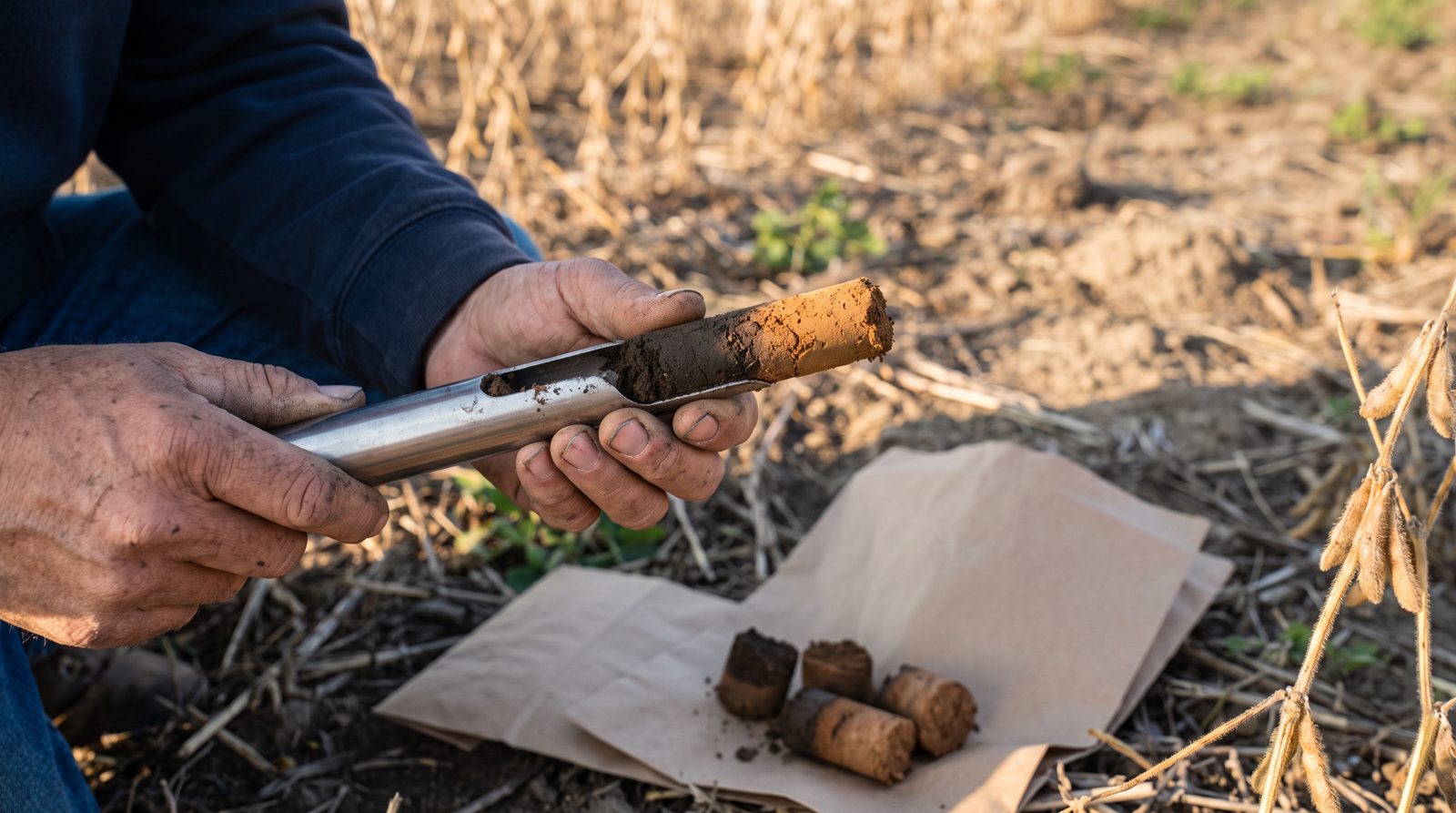
Soil pH measures how acidic or alkaline your soil is, on a scale from 0 to 14 where 7 is neutral. Most crops grow properly between pH 6.0 and 7.0, and for optimal soil performance AgriTec shoots for 6.7 to 6.9. It matters more than any other line on your soil test, because pH decides how much of everything else on that report the plant can actually reach.
That last point is the one worth sitting with. Farmers read a soil report top to bottom looking for phosphorus, potassium, and nitrogen, and pH gets a glance on the way past. But pH is not one input among many. It is the setting that determines what the rest of your fertilizer dollars are allowed to do.
What is soil pH, exactly?
pH stands for potential hydrogen, and it measures the concentration of hydrogen ions in the soil.
A useful way to picture it: think of a glass of water. Rather than measuring how much water is in the glass, we measure how much air is in it, and from that we can work out how much water it would take to fill it. Soil pH works the same way. We measure the hydrogen, and from that we know how much room is left for the nutrients that should be there instead.
In the soil, pH is really a readout of how the cation exchange sites are divided up. Healthy soil is typically:
- 75 percent calcium
- 10 to 20 percent magnesium
- 3 to 7 percent potassium
- 10 percent or less hydrogen
- under 1 percent sodium
When pH falls, that means hydrogen has taken over space that calcium should occupy. This is why pH and calcium base saturation move together, and why you cannot fix one while ignoring the other. If those percentages are new to you, our breakdown of base saturation covers how to read that section of your soil test.
What should my soil pH be?
For general plant growth, 6.0 to 7.0. For optimal soil performance in most crops, 6.7 to 6.9.
By crop, the targets tighten up:
- Corn: 6.0 to 6.8
- Soybeans: 6.0 to 6.5, where nodulation and nitrogen fixation hold up. Below 5.8, the rhizobia populations beans depend on for nitrogen start to fall off.
- Most other row crops including wheat, cotton, and alfalfa: 6.0 to 6.5
A handful of specialty crops genuinely prefer acidic ground. Blueberries, potatoes, sweet potatoes, and rye tolerate or prefer pH 4.5 to 6.0. For commercial row-crop agriculture, though, “acidic” almost always just means “yield-limiting.” We wrote up the full crop-by-crop pH targets separately if you want the longer list.
The other end matters too. Above pH 7.5, soils tend toward deficiencies in iron, zinc, and manganese, all of which the plant needs in small but non-negotiable amounts.
Why does soil pH decide what your fertilizer is worth?
Because below the target range, nutrients stop being available regardless of how much you applied.
Iowa State University research on nutrient availability shows the direct relationship: the more acidic the soil becomes, the more the nutrients in it become bound up chemically. Phosphorus is hit first and hardest, but the effect runs across the report.
The number that tends to get farmers’ attention is this one: at pH 5.5, USDA NRCS data shows roughly 33 percent of applied fertilizer becomes chemically unavailable to the plant. Not lost to runoff, not volatilized, just locked into forms the root cannot take up.
Run that against your own fertilizer bill for a moment. On a field sitting at 5.5, a third of that invoice is buying chemistry the crop will never see. Correcting pH first is not an additional cost on top of the fertilizer program. It is what makes the fertilizer program work at the rate you already paid for.
Below pH 5.5 there is a second problem: aluminum becomes soluble enough to be toxic, and it damages roots directly. A root system that cannot develop cannot reach water or nutrients no matter how well the field is fertilized.
What else does low pH cost you?
Two things farmers usually attribute to something else.
Weeds. Many of the weeds fought year after year are a reflection of soil condition rather than a random invasion. The lower the pH goes and the unhealthier the soil gets, the easier it is for those species to establish and hold ground. In hay and pasture this shows up clearly with broomsedge, which thrives exactly where fertility and pH have slipped.
Soil structure. In low-pH soil the ground tightens up, which restricts water infiltration, nutrient movement, microbial life, and root development. At the other extreme, when magnesium runs too high, soil turns sticky and holds water in ways that immobilize nutrients. Calcium acts as a natural soil aerator, so getting calcium levels right is what sets the soil up to regulate water, support soil biology, and let roots go where they need to go.
How do you raise soil pH?
You displace hydrogen on the exchange sites with calcium. There are two practical ways to do that on a working farm: dry agricultural lime, or a liquid calcium program.
Dry lime works, and where magnesium is also below target, dolomitic lime remains a genuinely good choice. Its limits are practical. It takes 6 to 12 months to fully break down and shift pH, it is heavy to move, and on no-till acres or established pasture you cannot incorporate it, so it sits in the top few inches for years.
A liquid calcium program is the alternative when the timeline or the field will not accommodate that. AgriTec’s Pro-Cal begins reacting within 7 to 14 days of application, on contact with soil moisture and acidity, and it goes out through a standard sprayer. Rates are sized off the soil test rather than sold by the ton. As a starting reference from the AgriTec rate guide:
| Current pH | Calcium base saturation | Broadcast rate |
|---|---|---|
| 6.0 to 6.4 | 59 to 64 percent | 2 gal/ac |
| 5.5 to 5.9 | 50 to 60 percent | 3 to 3.5 gal/ac |
| 5.0 to 5.4 | 40 to 50 percent | 3.5 to 4.5 gal/ac |
| 4.5 to 4.9 | 30 to 40 percent | 5.5 gal/ac |
Broadcast and VRT applications carry a 3 to 4 year residual. The rate scales with the gap between your current calcium base saturation and the 75 percent target, which is why the prescription comes off your soil test rather than off a rule of thumb. If you want the longer comparison, we covered how to raise soil pH without lime in detail, and the Pro-Cal product page has the label and mixing guidance.
One compatibility note worth knowing before you plan a tank mix: do not combine Pro-Cal with sulfur products like ATS or with phosphorus blends like 3-18-18+. The reaction reduces effectiveness. Run calcium passes separately, and jar-test any new combination before scaling up.
What pH movement is realistic?
Treat these as planning assumptions, not promises. Soil, weather, and starting chemistry all move the result.
Across 14 paired before-and-after soil tests from real AgriTec customers in 8 states, every pair moved up in both pH and calcium base saturation. The average lift was 0.71 points, and the middle 50 percent of results fell between 0.4 and 0.9 points. The strongest single result moved a Tennessee field from pH 4.8 to 6.6, a 1.8-point lift, with calcium base saturation climbing from 44 percent to 89 percent.
In AgriTec’s hay recovery study with Tuskegee University, plot pH moved from 4.8 to 6.4. That full report is pending publication.
What those numbers should tell you is the shape of the outcome, not a guarantee for your field. A field starting at 5.9 has less room to move than one starting at 4.8, and a program sized off the wrong soil test will underperform either way.
How do you know it worked?
You re-test. Plan on a soil test at 9 to 12 months after application, and leave a check strip so you are comparing the treated ground against the same field untreated rather than against last year’s weather.
That is also the honest answer to whether any pH program was worth the money. pH is one of the few things in crop fertility you can verify directly with a cheap test rather than infer from yield, where a dozen other variables are in play.
Start with the soil test
The next time you pull up a soil report, look at pH and base saturation before anything else. Those two numbers tell you whether the rest of the report is a plan or a wish list.
If you want a second set of eyes on yours, AgriTec’s agronomy team reviews soil tests and writes pH correction plans at no charge, whether or not you ever buy a gallon of anything. Send in a soil test or get in touch and we will read it with you.
Frequently asked questions
What is soil pH?
Soil pH measures the concentration of hydrogen ions in the soil on a scale from 0 to 14, where 7 is neutral, below 7 is acidic, and above 7 is alkaline. The acronym stands for potential hydrogen. On a soil test it is the single number that tells you whether the rest of the report can actually be used by the plant.
What should my soil pH be?
Most crops grow properly between pH 6.0 and 7.0. For optimal soil performance AgriTec targets 6.7 to 6.9. Corn performs best at 6.0 to 6.8 and soybeans at 6.0 to 6.5, where nodulation and nitrogen fixation hold up. Below pH 5.8 to 6.0, fertilizer efficiency starts dropping measurably.
What happens to fertilizer when soil pH is too low?
It gets chemically tied up before the plant can use it. At pH 5.5, USDA NRCS data shows roughly 33 percent of applied fertilizer becomes chemically unavailable to the plant. Phosphorus binds first and hardest. You paid for the full rate and the crop can only reach part of it.
What does soil pH tell me about calcium?
Almost everything. Healthy soil is typically 75 percent calcium, 10 to 20 percent magnesium, 3 to 7 percent potassium, 10 percent or less hydrogen, and under 1 percent sodium on the cation exchange sites. pH is essentially a readout of how much of that space hydrogen has taken over from calcium, which is why pH and calcium base saturation move together.
How do I raise soil pH?
You displace hydrogen on the exchange sites with calcium, using either dry agricultural lime or a liquid calcium program. AgriTec sizes a Pro-Cal prescription off your CEC, current pH, and current calcium base saturation, working toward the 75 percent calcium target. Broadcast and VRT applications carry a 3 to 4 year residual.
How long does it take to correct soil pH?
Pro-Cal begins reacting within 7 to 14 days of application, on contact with soil moisture and acidity. Dry agricultural lime takes 6 to 12 months to fully break down and shift pH. Plan on a re-test at 9 to 12 months to confirm the movement either way.