
3-18-18+ · Built for legumes
In stock · Ships now
Paid back at 6.5 bushels. Everything after is yours.
Placed P and K with the micronutrients that run nitrogen fixation. In the row at planting on beans, and back on again at green-up and after every cutting on hay.
$3,230 A DELIVERED TOTE · $70.50/ACRE AT 6 GAL
3-18-18+ is in stock at current price-sheet pricing. Looking at the four-level Performance Series instead? That one prebuys and ships October 1 →
Same base, one difference
3-18-18, or 3-18-18+?
Identical orthophosphate P and K underneath. The plus carries a micronutrient pack on top of it.
3-18-18
$2,950
a tote · $64.38/ac at 6 gal
3-18-18+
$3,230
a tote · $70.50/ac at 6 gal
only $1.02 more a gallon
The whole difference
$1.02 a gallon, or $6.12 an acre at 6 gal. About 0.6 of a bushel at $11 beans.
Agricenter International, Memphis TN · 2022 · soybeans
The upgrade costs 0.6 of a bushel. The program carrying it made 7.3 more.
Untreated check
No foliar nutrition
Calcium + 3-18-18
Simplified 3-pass · 10 gal/ac total
Full program
Ca · 3-18-18 · Foliar-Act · Nitro-Maxx+ · 14.5 gal/ac total
Randomized complete block, 4 reps, P = 0.015, LSD 5.86 bu. Only gaps wider than the LSD are real, and both treated programs clear it against the check. Bars run from zero, so the columns look close and the gain sits in the badge where the LSD can be read beside it. The program earned this, not the starter alone, and it is one site in one season. Read the full report →
Neither grade carries the 1% sulfur, which is the dash one in 3-18-18-1. If your soil test already shows those micronutrients adequate, the base grade is the better buy and we will tell you so. Send it in and find out →
Before you spend anything
3-18-18 PLUS does more than just pay for itself. It pays YOU.
What one acre has to clear, and what comes after it:
 Soybeans
 $70.50
an acre
product, 6 gal
$11
a bushel
beans today
6.5
bu/ac
to break even
 Alfalfa
 $82.25
an acre
product, 7 gal
$220
a ton
hay today
0.38
tons/ac
to break even
A hurdle, not a forecast. Arithmetic at AgriTec planning prices (2026-07), not a promise of yield. What growers actually reported is further down.
01 / What the plus is
Two jobs in one jug. The fertility, and the pack riding on top of it.
Straight 3-18-18 is phosphorus and potassium in orthophosphate form, the form a plant takes up without waiting on a conversion. The plus is a micronutrient supercharger pack carried on that same base. You are not choosing between fertility and micronutrients, you are running one pass that carries both.
The base
Orthophosphate 3-18-18
Immediately available P and K in a low-salt matrix, put where the roots are: the seed zone at planting, the stand between cuttings. Phosphorus does not move to the root, so where you put it decides how much of it the crop ever sees.
The plus
micronutrient supercharger pack
Zinc, manganese, boron, cobalt, molybdenum, and Ascophyllum nodosum kelp extract. Four of those six do their most specific work on a crop that carries nodules.
Zn
Zinc
Enzyme systems behind early growth
Mn
Manganese
Photosynthesis and chlorophyll
B
Boron
Flowering, pod and seed set
Co
Cobalt
Nitrogen-fixation cofactor
Mo
Molybdenum
Nitrogen-fixation cofactor
Kelp
A. nodosum
Associated with stress tolerance
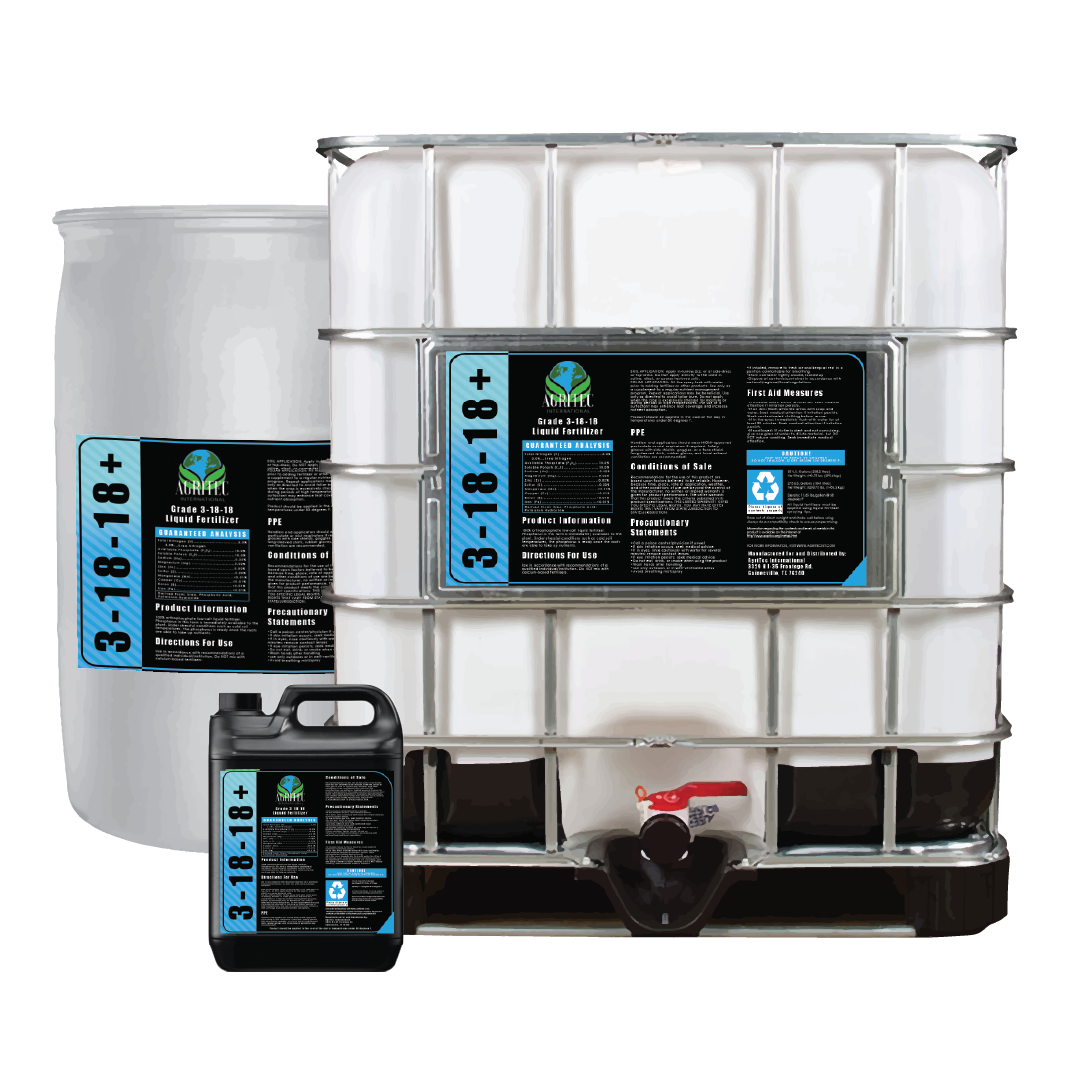
Composition is AgriTec's own justification sheet for this grade, which names the plus package outright and lists its ingredients. The sulfur that some growers ask about is the dash one in 3-18-18-1, a different grade.
Buy 3-18-18+ →02 / Why legumes
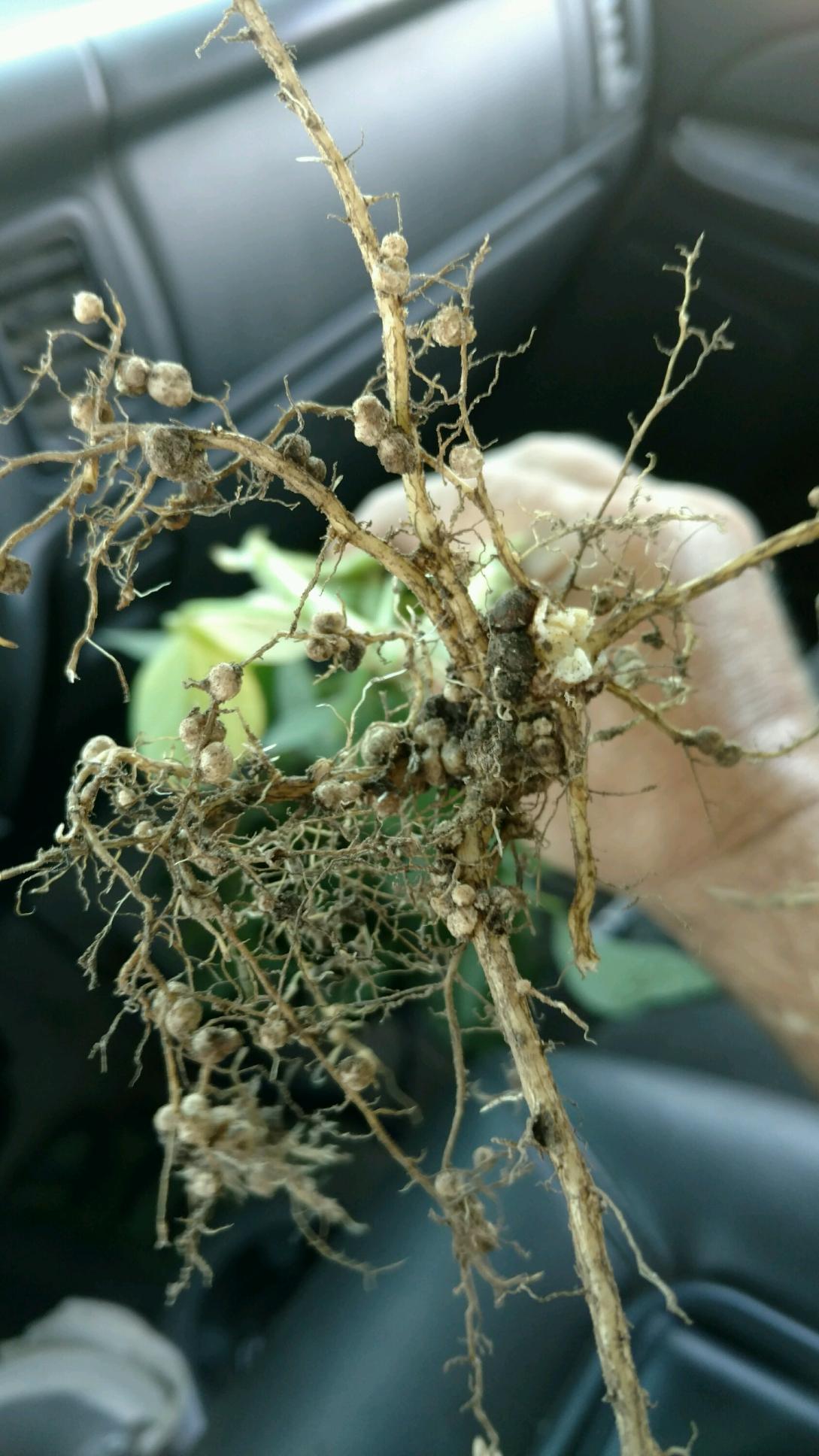
A nodule is a factory. Cobalt and molybdenum are the parts.
Soybeans and alfalfa make their own nitrogen, which is exactly why growers under-invest in them. The crop is not asking for more nitrogen. It is asking for the things that let the nitrogen factory run and the things it genuinely cannot make: placed phosphorus, the potassium a hay crop hauls off the field by the ton, and the micronutrients that sit inside the fixation pathway itself.
Cobalt and molybdenum are cofactors for biological nitrogen fixation and nitrogen metabolism. On a legume they help the crop use the nitrogen it is already fixing rather than supplying more. Boron does its work at flowering and pod set. That is four of the six components in the plus package pointed straight at crops that nodulate.
Soybeans
6 gal/ac · $70.50 an acre
At planting, in-furrow or 2 by 2
Covers its cost if the crop gains 6.5 bushels an acre
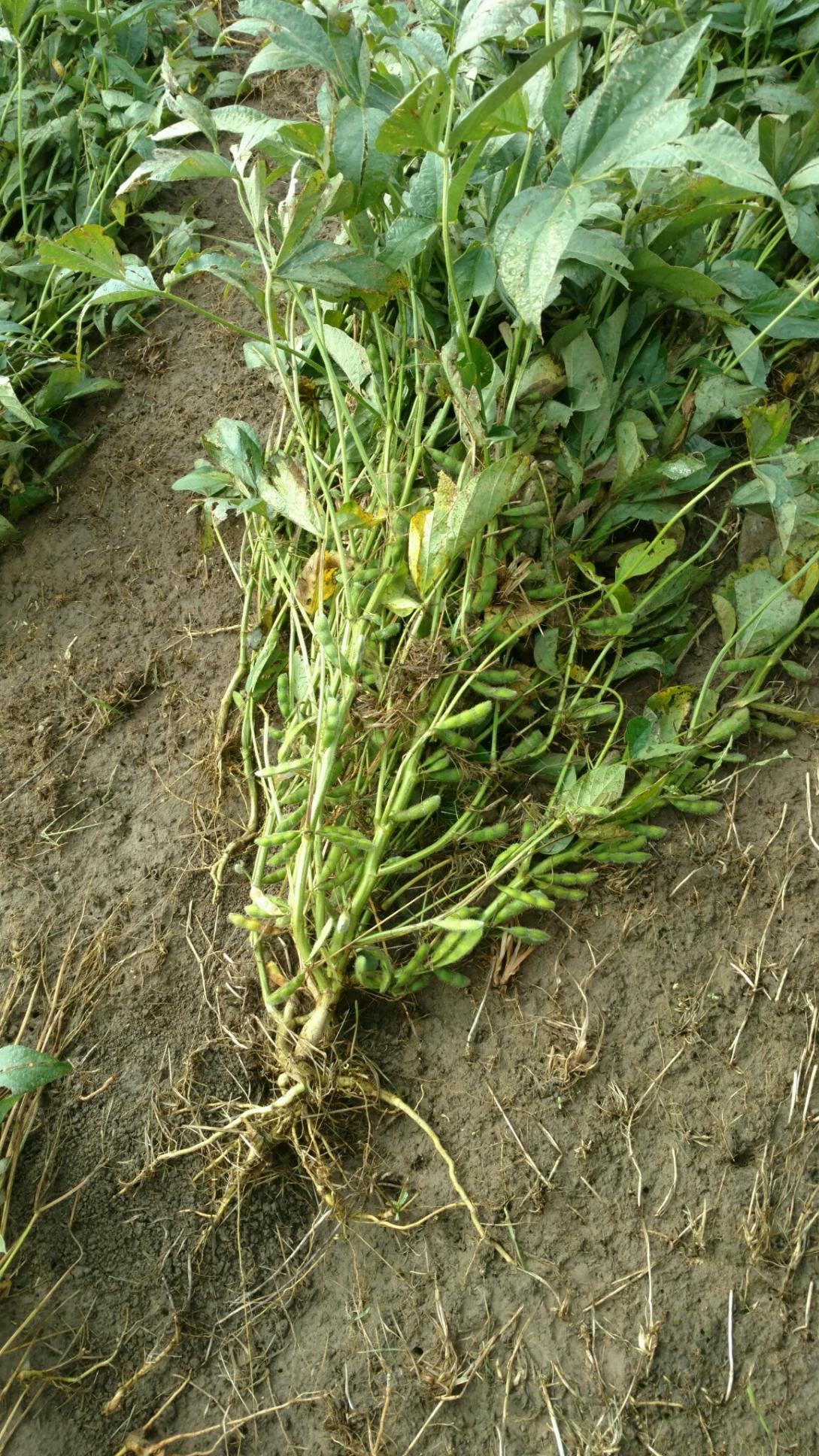
P drives nodulation and pod count, and broadcast dry P is slow to reach a seedling root. The published Mid-South program places 5 to 7 gal/ac of 3-18-18+ at planting on top of a calcium foundation.
Alfalfa
7 gal/ac · $82.25 an acre
Establishment, green-up, and after cuttings
Covers its cost if the crop gains about a third of a ton an acre
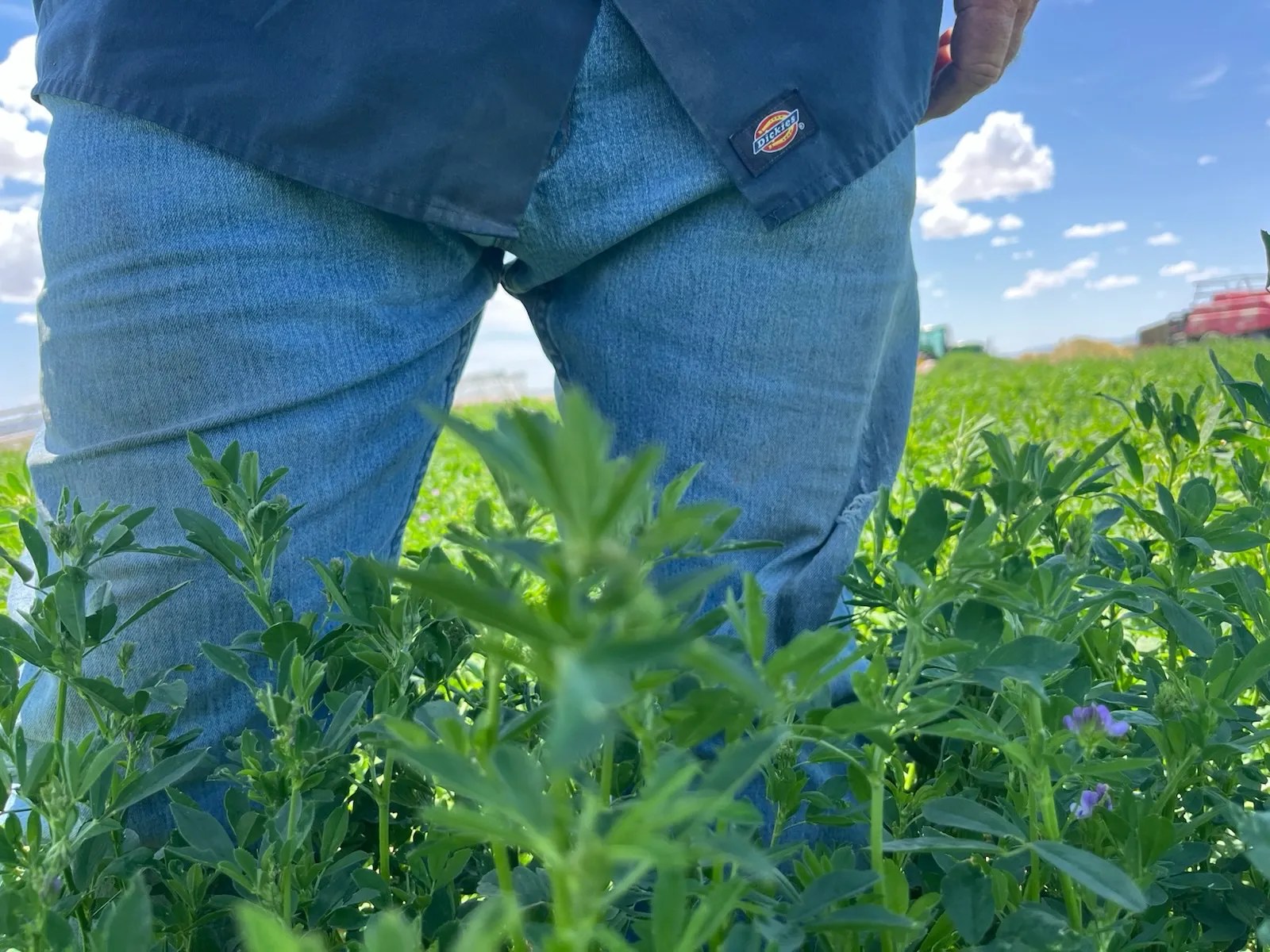
A stand has to hold four to five years, and it does that on deep P and K feeding crown depth and regrowth. The published stand-longevity program runs 7 gal/ac of 3-18-18+ at establishment.
Not just a starter
Where it goes in, across the season.
It replaces dry P and K at planting, which is where most growers meet it. On a crop you cut more than once it goes back on after the cutting too, at rates AgriTec already publishes.
Soybeans
On beans this is the planting pass. The published program runs it once, and we are not going to pretend otherwise.
Alfalfa and hay
On a stand you cut more than once, it earns its place more than once.
These are the published passes, not a licence to keep adding. Rate and timing follow the approved label and your soil test, and your rep confirms the program in writing.
Per-acre figures are delivered tote pricing at the rate shown. Program rates come from AgriTec's published crop programs; your soil test moves them, which is what the free read below is for.
03 / Program equivalency
Most growers are ahead before a single bushel grows.
Break-even above assumes you are spending new money. Often you are not, you are moving it. Enter what you spread per acre today and the equivalent AgriTec program prices itself beside it on a nutrient-availability basis, using the replacement rates AgriTec already publishes. Where the liquid comes in under your dry program, that gap is money kept on the invoice, and the yield question has not even been asked yet. Every price is editable, because the only honest benchmark is your own.
A common dry P and K program
$111 to $132/ac
150-200 lb DAP + 200 lb potash at example retail (DAP $843/ton, potash $482/ton)
3-18-18+ placed at the soybean program rate
$70.50/ac at 6 gal
Delivered tote pricing at $11.75 a gallon, freight included east of the Rockies.
The dry figure is AgriTec's own published input-cost comparison on the 3-18-18+ justification sheet, priced at the example retail on that sheet. It is a comparison of what the two programs cost, not a claim that they yield the same. Your dry prices are almost certainly different, which is what the calculator below is for.
What you spread today
Prices we used (edit to your invoice)
USDA Production Cost Report average, 5 regions, as of 2026-09-04. Lime is a planning figure.
Enter what you spread per acre and the AgriTec swap prices itself here as you type.
Example program · type over it with your numbers
Your dry program
The AgriTec swap
Per acre $0
Your acres $0
Per acre $0
Your acres $0
Enter your acres to turn the swap into containers you can order.
program
swap
✓ 100% orthophosphate placed where the seedling can use it on day one, no cold-soil conversion delay that broadcast DAP fights.
✓ Controlled-release nitrogen, 6 to 7 times more available than dry urea, with less loss to volatilization between spreading and rain.
✓ Pro-Cal starts the base-saturation correction in weeks. Pelleted lime takes 12 to 18 months to move the number.
✓ Potassium-carbonate K shows up in tissue tests fast and can be timed to grain fill instead of broadcast and hoped for.
Pay in 4* Split it into 4 interest-free payments with PayPal · John Deere Financial · AgQuest · *terms apply
Gallon equivalences follow AgriTec's published replacement programs on a nutrient-availability basis, not a pound-for-pound match. Liquid pricing is delivered 275-gal tote pricing from the current sheet, freight included east of the Rockies. Dry prices are editable, use your own invoice. Results vary with crop, rate, timing, soil, weather, and management; your rep confirms the final program in writing.
What it replaces
The dry phosphorus and potassium you spread. 3-18-18+ carries the P and K in orthophosphate form and places it where the crop can reach it, so it stands in for the DAP and potash at planting and for the P-K you would otherwise broadcast on a stand at green-up or after a cutting.
What it does not replace
Your calcium and pH correction. If the soil test says base saturation is short, lime or Pro-Cal still has to happen and 3-18-18+ will not do it. That is why the program below runs a calcium pass underneath the starter rather than instead of it.
04 / Buy the product
In stock. Freight already in the price.
Enter your acres and we'll size it, pack it into real containers, and show the delivered total. Freight is already in the number, east of the Rockies.
Size it to your acres
How much 3-18-18+ do you need?
Typical range 5–7 gal/ac; your agronomist sets the exact rate from your soil test. Adjust it to see how the package changes.
Enter your numbers and we'll pack the exact containers: delivered total, freight included. No surprises at the dock.
Your Ca base saturation is already at or above 75%.
You don't need a calcium application right now. Save it for the fields that do. Ask an agronomist what your soil actually calls for.
You'll need
–
We'd ship you
Delivered total
–
freight included · – / ac
–
Running tanker-scale volume? Bulk tanker loads are call-to-order: (833) 247-4832.
Pay in 4* 4 interest-free payments of – with PayPal Pay Later. Just – due today. John Deere Financial and AgQuest also available.
*Financing at checkout, subject to approval. Terms apply.
Your sized package
–
Pay in 4* Split it into 4 interest-free payments with PayPal · John Deere Financial · AgQuest · *terms apply
Paid securely at checkout: card or PayPal, including Pay in 4. Shipping is free on most orders, and a free soil or tissue kit comes with orders above $300. An AgriTec agronomist confirms quantities and delivery before anything ships. If anything needs adjusting, we refund the difference first. Prefer financing? Call (833) 247-4832.
That's a general rate on general ground. For a program built around your own phosphorus, potassium, and pH, send the soil test and an agronomist will size every pass on it. The read costs nothing.
Build my custom program →5 gal jug
$42.00/gal · covers about 1 acre of beans at 6 gal
$210
55 gal drum Test strip
$16.55/gal · covers about 9 acres of beans at 6 gal
$910
275 gal tote
$11.75/gal · covers about 46 acres of beans at 6 gal
$3,230
3850 gal tanker
$9.60/gal · covers about 642 acres of beans at 6 gal
Call to order
Prefer the full product page with the label, the analysis, and the mixing notes? See the 3-18-18+ product page →
Running it through your equipment
- Where does it go?
- In the row at planting, in-furrow or 2 by 2, which is the placement the published legume programs run. It is a low-salt orthophosphate liquid, which is what lets it sit near the seed instead of being kept away from it.
- Can I tank-mix it?
- Compatible with any fungicide or herbicide. Jar test before mixing. The complete mix, your water quality, concentrations, and order of addition all need reviewing first.
- What must never share the tank?
- Calcium. Pro-Cal and Advanced-Cal must never go in the same tank as a phosphate product, and 3-18-18+ is a phosphate. That is why the program below runs calcium as its own pass rather than bundling it in. Get this one wrong and you plug a boom.
- Order of addition?
- Add water to the tank FIRST, then products. Never add product to an empty tank.
Jar test every combination before it goes in the tank, especially unfamiliar chemistries or a new formulation of something you have run before. Read the 3-18-18+ label →
Not ready for a tote?
Run it beside your standard first.
A 55 gal drum at $910 covers about 9 acres of beans, enough to put a treated strip next to an untreated one and count the difference off your own combine monitor. That is how several of the growers further down started, and it is the honest way to find out whether this works on your ground rather than somebody else's.
Start with a drum, then scale →Ordering for a planting window
AgriTec's programs ask you to coordinate delivery 3 to 7 days ahead of the window you are applying in. Book the date with the order and it will be on the yard when you need it.
Running more than one product? Build the whole system →Pay in 4* Split it into 4 interest-free payments with PayPal · John Deere Financial · AgQuest · *terms apply
05 / Buy the system
3-18-18+ is one pass. The program is what the trials ran.
Every AgriTec legume result you will read further down came off a program, not a single jug: a calcium foundation underneath, the placed starter at planting, and defense at flowering or through the cuttings. Pick your crop and how far you want to take it, and the whole thing prices itself into containers you can order in one click.
For scale: the recommended soybean tier on 240 acres prices at $31,280 delivered, about $130.33 an acre across every pass in the program. Change the acres above to see your own.
06 / The proof
Replicated, university-partnered, and reported with the caveats.
Soybeans · Agricenter International, Memphis 2025
+7.9 bu/ac
0.25 gal/ac at planting (replicated RCBD, 3 reps)
The pack in the plus has its own soybean trial.
AgriTec sells this same micronutrient and kelp pack on its own, and ran it by itself in a replicated soybean trial at Agricenter in 2025. Same zinc, manganese, boron, cobalt, molybdenum, and kelp that ride in this jug, which is why the result speaks to what you are buying rather than to something next to it.
Read this as evidence for the pack, not as a result for this product. The trial applied the pack alone at 0.25 gal/ac at planting; in 3-18-18+ it rides inside the blend at the blend's own inclusion rate, which is a different thing. One site, one season.
Soybeans · Agricenter International, Memphis TN · 2022
+9.7 bu/ac over the untreated check (73.2 vs 63.5), P = 0.015
Every program that led with calcium at planting and carried the 3-18-18 starter finished in the top statistical group. The potash-only program without calcium did not separate from the untreated check.
P = 0.015 · LSD 5.86 bu · 4 reps · Randomized complete block. Only differences larger than the LSD are real, and this is one site, one season. The trial ran the 3-18-18 starter inside a full program; it was not a test of 3-18-18+ on its own.
Read the full trial report →Alfalfa · Agricenter International, Memphis TN · 2022
Every spray-applied seeding-year program out-yielded the untreated check on harvested weight.
The program carrying 3-18-18 with calcium and nitrogen cut 75% more than ground where nothing was applied, on a first-year stand cut once. The trial reports weight per plot rather than tons per acre, so treat it as the size of the response, not as a tonnage you can book.
P = 0.0016 · LSD 1.268 lb · 4 reps. The treated programs did NOT separate from each other, so only the treated-versus-untreated contrast is statistically supported. Single cut, single site, single season.
Read the full trial report →Why the components are in there
Phosphorus is immobile in soil, so roots have to physically reach it. Banding or row-placing it instead of broadcasting reduces soil contact and fixation, and improves how much the crop gets in the first season.
WSU Extension, broadcast vs banded P; OSU Soil Fertility Handbook
Beck's Practical Farm Research ran its 2025 soybean high-yield attempt on in-furrow starter with carbon timing and micronutrients at V6 and R2, finishing at 135.5 bu/ac.
Beck's PFR Indiana 2025, 125 Bushel Attempt
Zinc and manganese run the enzyme systems behind photosynthesis and early growth. Where either is short the crop can look acceptable and still grow unevenly, which is a yield cost that never shows up as a visible deficiency.
AgriTec 3-18-18+ justification sheet, function map
Boron is tied to pollination, flowering, pod and kernel set, and fruit retention, which is why it tends to pay around reproductive timing rather than early.
AgriTec 3-18-18+ justification sheet; Michigan State Extension foliar B, 29 sites
Cobalt and molybdenum are cofactors for biological nitrogen fixation and nitrogen metabolism, so in legumes they help the crop use nitrogen it already has rather than supplying more.
Peer-reviewed soybean Co/Mo and biological nitrogen fixation literature
Ascophyllum nodosum extract is associated with improved stress tolerance, which is what the package is aimed at: keeping the crop functioning through the weeks that decide yield.
Peer-reviewed Ascophyllum nodosum stress-tolerance literature
These findings describe what the components in this level are known to do and where that response shows up. They are not a yield or return claim for the finished product, and no trial has compared the four levels against one another. Results vary with crop, rate, timing, placement, soil, weather, and management.
07 / Growers running it on legumes
Their words, not ours.
Every quote below names 3-18-18+ on a bean or alfalfa acre, printed the way it came in. Grower reports are not controlled trials, and we do not present them as one.
WY · 2021 · Alfalfa
“First cutting on our Alfalfa last year yielded around 2.75 tons. This year after using Adv Cal and 3-18-18+ we got 3.5 tons on the first cutting and the second cutting is looking really good. We are going to use your products on all our different fields.”
IA · 2020 · Alfalfa
“I applied 2 gallons of Adv-cal and 6 gallons of 3-18-18 Plus on my alfalfa field and got 10 bails off of each acre on a field i normally get 5 to 6 bails off of”
MN · 2025 · Soybeans
“I put on 3.18.18+ 10 days ago and the beans I treated have way out done the other beans, it's amazing.”
IN · 2023 · Soybeans
“We used the 3-18-18+ on our beans and saw a significant yield increase. I want to use that again on my beans and run some hay and pasture ground with y'all as well”
MI · 2023 · Soybeans
“We put the NitroMaxx+ on our wheat and made really good production and put the 3-18-18+ on our beans and had just as good if not better production than everyone else around here.”
TX · 2024 · Alfalfa
“That Alfalfa field turn around after the Adv Cal and 3-18-18+ went down its greener and fuller then I have ever seen it”
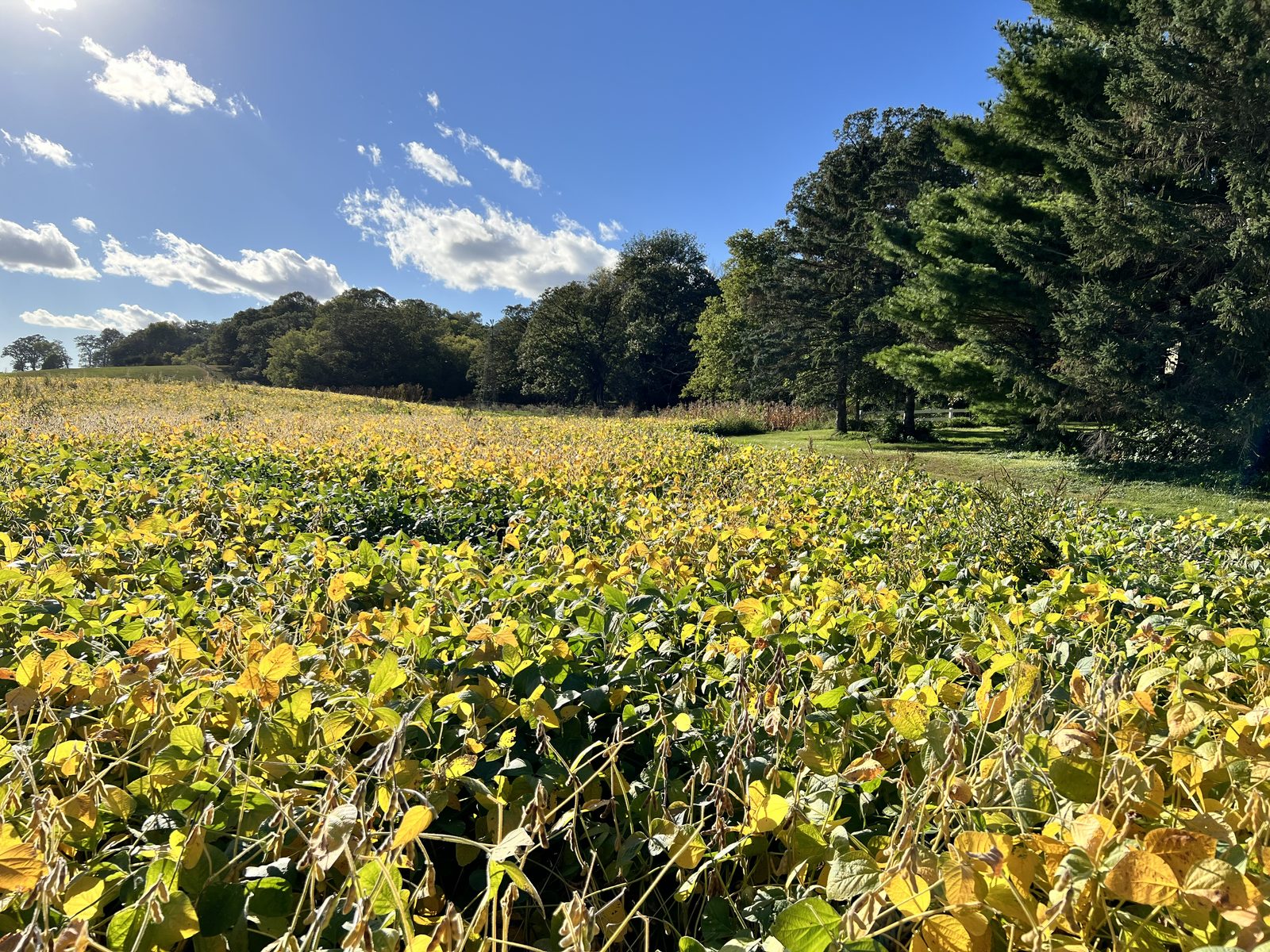
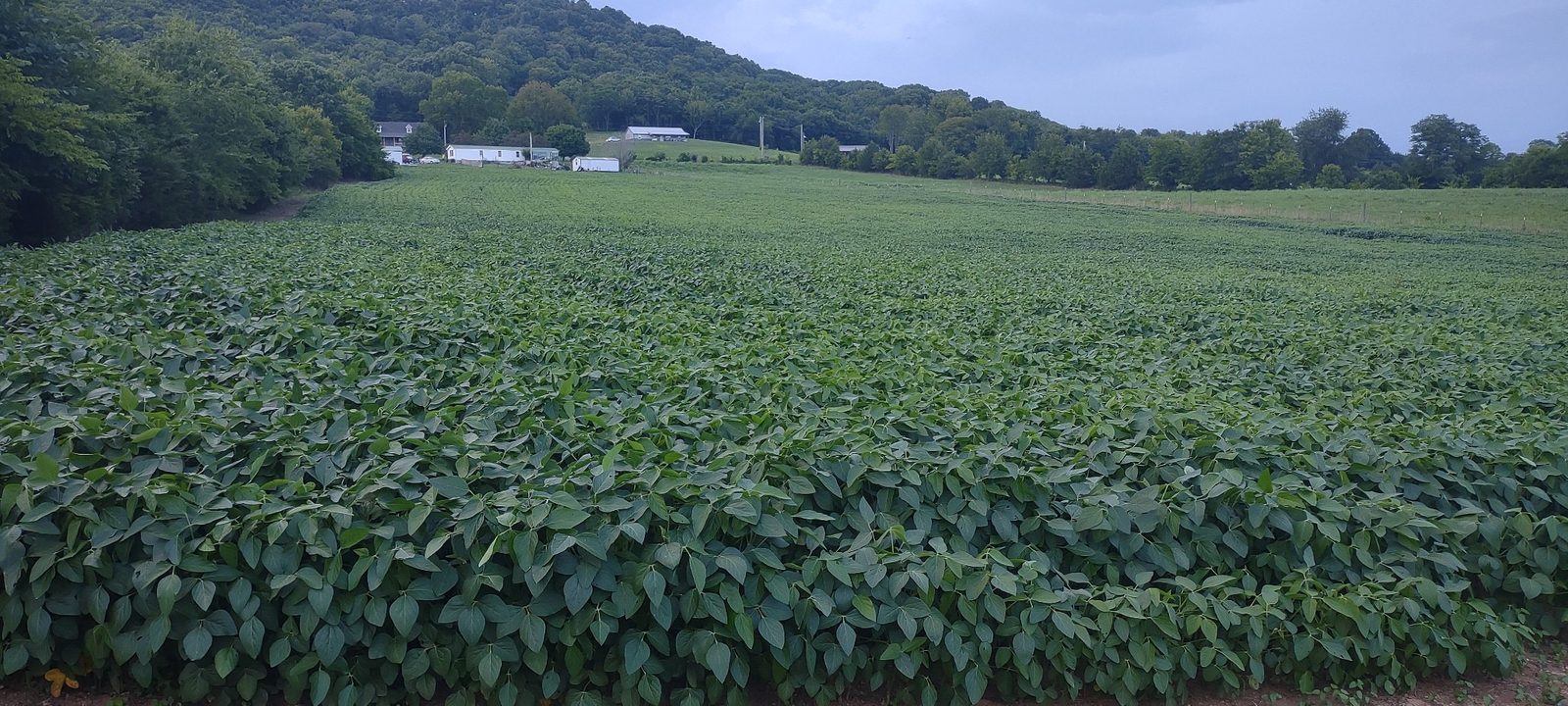
Customer photos, their captions unedited. These came in from growers running AgriTec programs, and where a caption is in the grower's words it names what they actually applied. Only the first is a 3-18-18 program; the others ran calcium or nitrogen. They are here as pictures of real fields, not as results for this product.
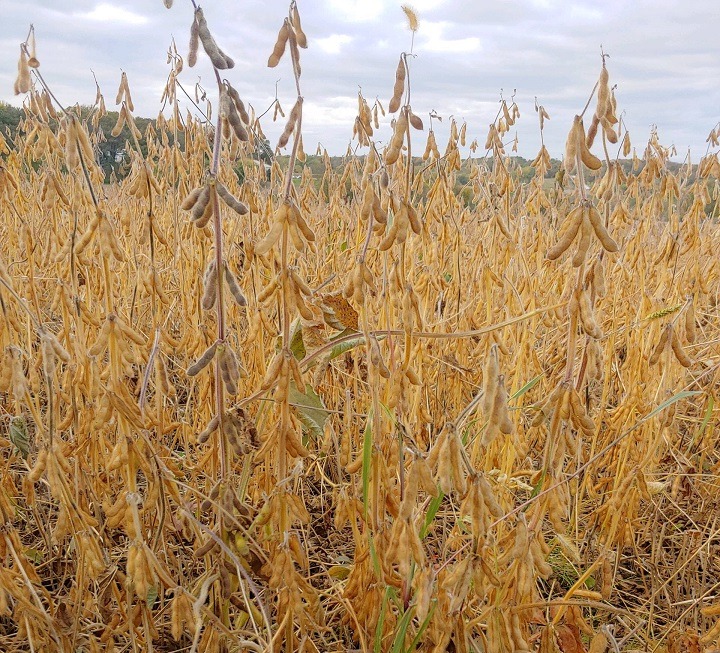
“My historical bean average has been 42 bu/ac. I applied your program, 4 gal 3-18-18 and 3 gal Advance-Cal per acre, and this year we got 72 bu per acre.”
Brad H. · 2020
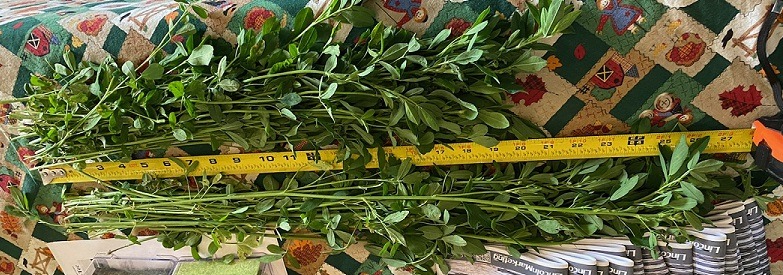
“Rob, the top is my control and the bottom is with 2.5 gal Advance-Cal + 1.5 gal Nitro-Maxx+ + 16 oz Foliar-Act. I gained over 15 bushels per acre of beans.”
Gary W. · 2020
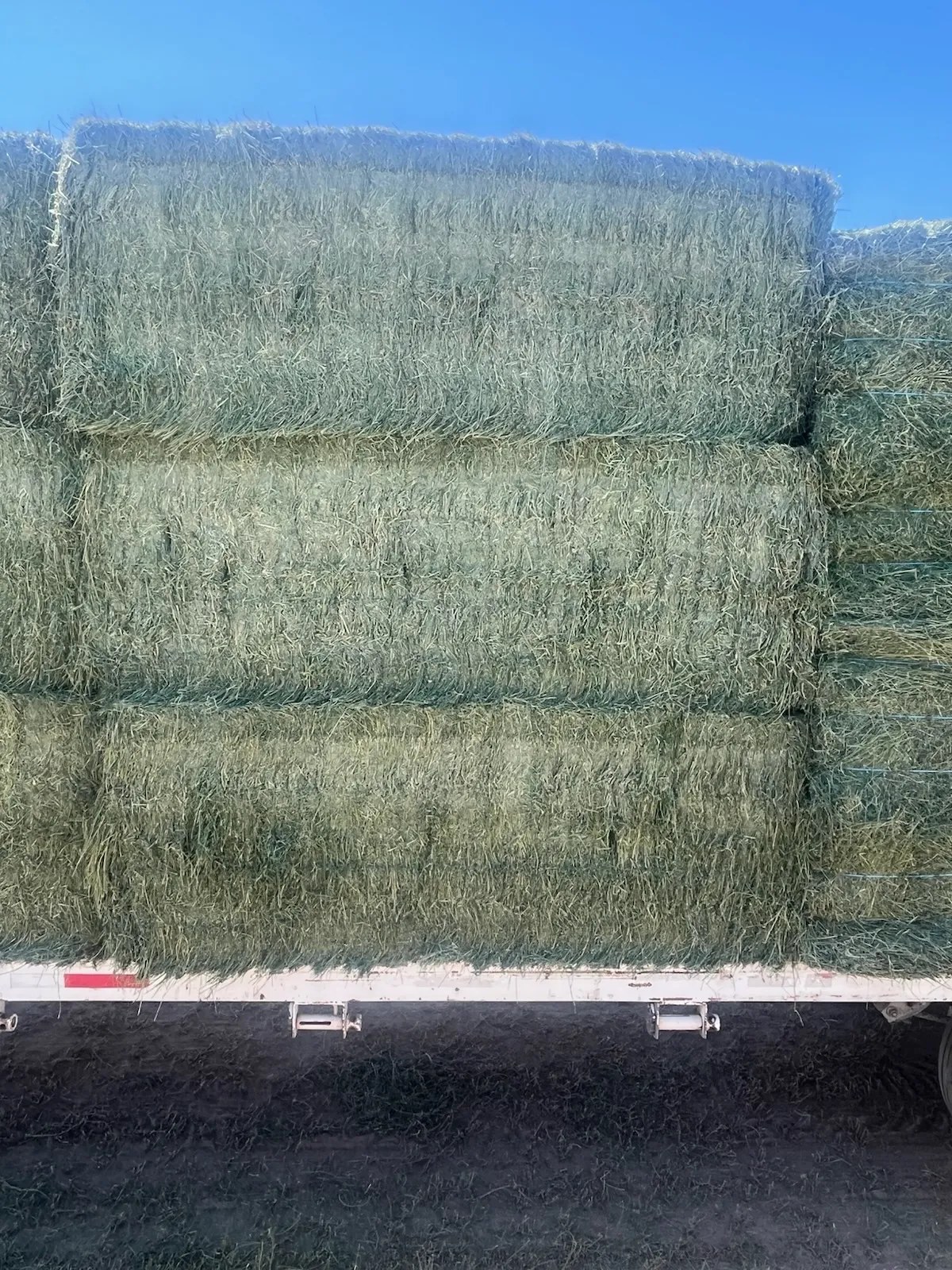
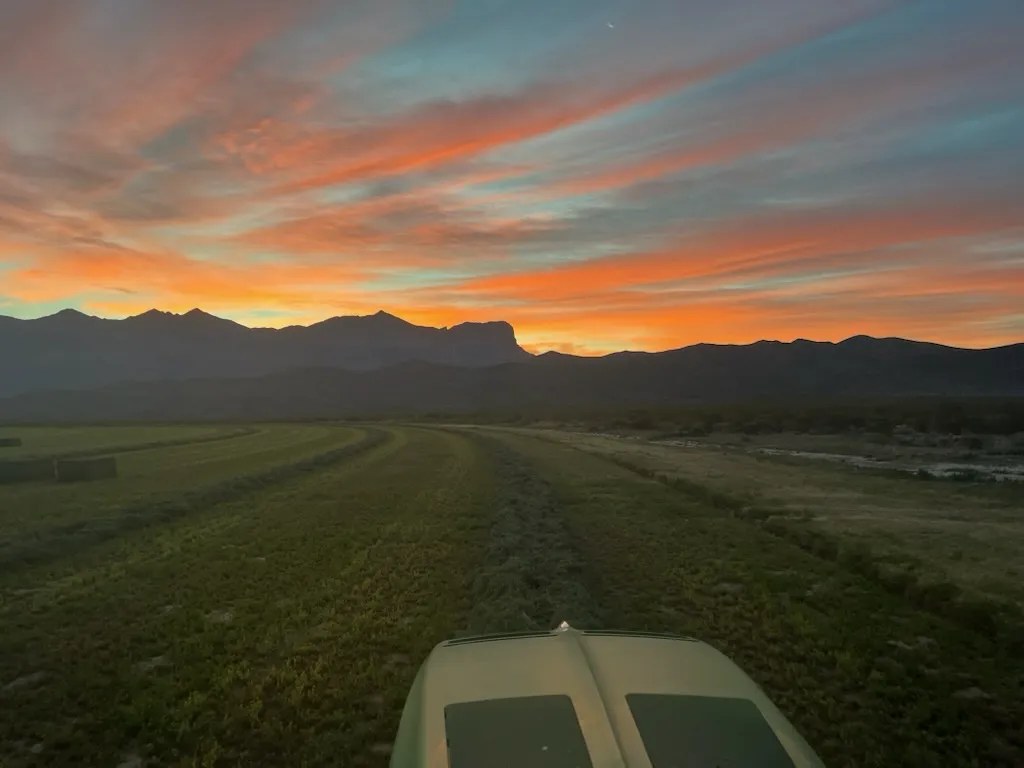
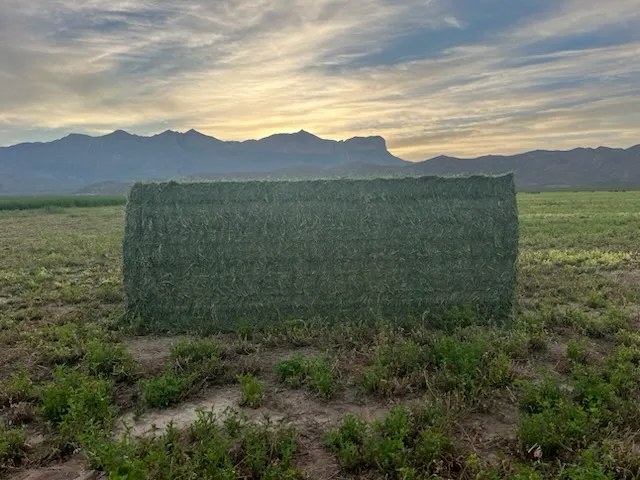
Baled on an AgriTec alfalfa program.
Customer photo · 2026
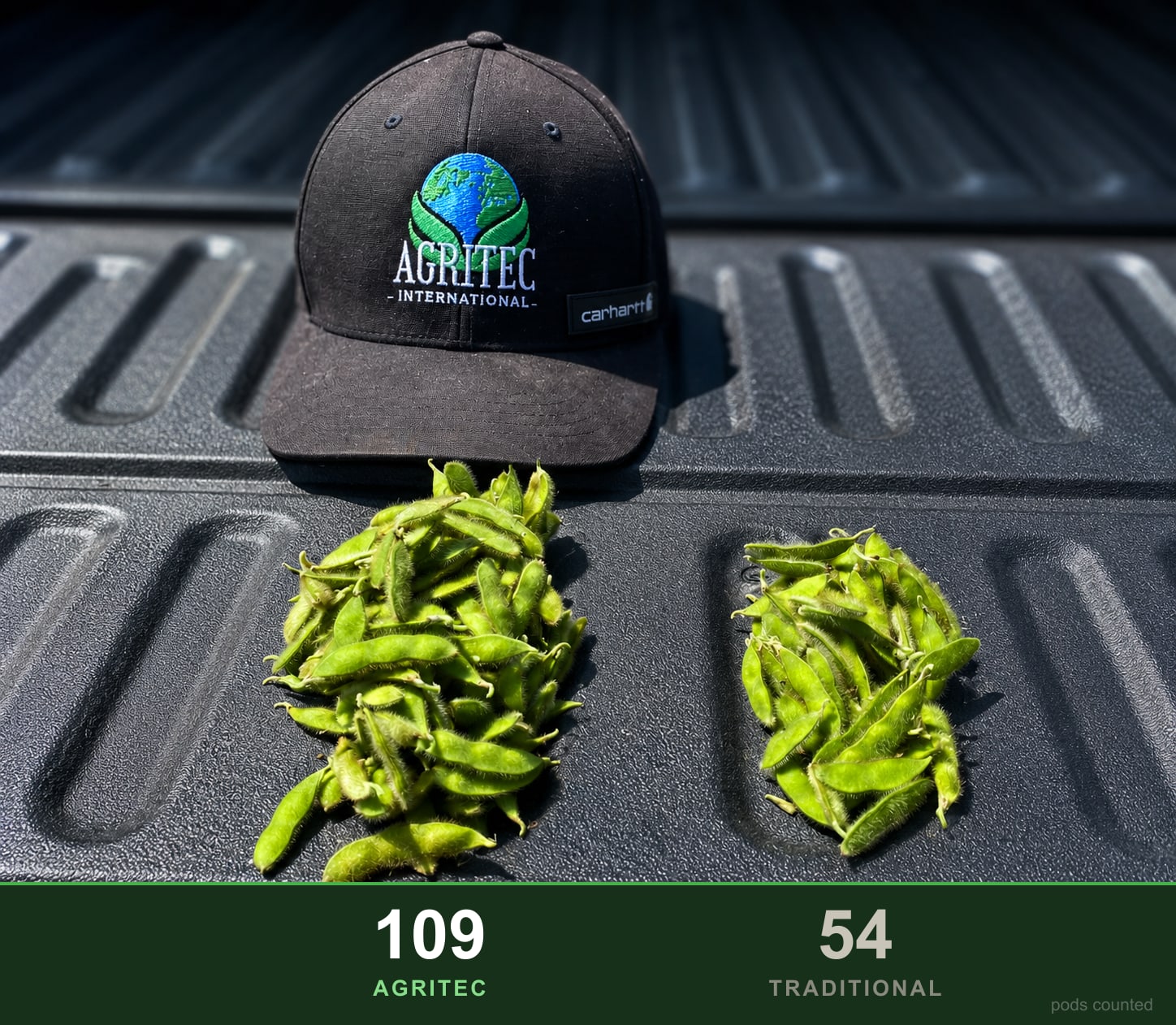
AgriTec on the left, 109 pods. A traditional program on the right, 54. One hand count, not a replicated trial.
Customer photo · 2026
08 / Straight answers
3-18-18+ questions, answered.
What does the plus in 3-18-18+ actually add? +
A micronutrient supercharger pack: zinc, manganese, boron, cobalt, molybdenum, and Ascophyllum nodosum kelp extract, carried on the same orthophosphate 3-18-18 base. Straight 3-18-18 is the phosphorus and potassium alone. The plus is that micronutrient and kelp pack riding with it, which is why it is the grade AgriTec's legume programs are written around.
Why is 3-18-18+ pitched at soybeans and alfalfa specifically? +
Because of two micronutrients in the plus package. Cobalt and molybdenum are cofactors for biological nitrogen fixation and nitrogen metabolism, so on a legume they help the crop use nitrogen it is already fixing rather than supplying more. A corn plant has no nodules and gets nothing from that pair. Boron matters at flowering and pod set, which is where legumes set yield. The phosphorus and potassium underneath serve every crop; the plus package is aimed at the ones that fix their own nitrogen.
Can I buy it right now, or is this the prebuy? +
This is the buy-now product. 3-18-18+ is in stock at current price-sheet pricing and ships now, freight included east of the Rockies. The four-level Performance Series on the prebuy page is a separate thing: it ships starting October 1. If you need product on the ground this season, buy from this page.
Is this only a planting-time product? +
On beans, effectively yes: the published Mid-South program runs it once, at planting, and that is the pass it is built for. On alfalfa and hay it works across the season. AgriTec's published programs put it in at establishment at 7 gal/ac, again at green-up at 2 gal/ac alongside the nitrogen pass, and at 1 to 2 gal/ac as a corrective on a thin stand. The Whitesboro producer fed it back at 4 gal/ac five days after baling and had the second cutting growing. On a crop you cut more than once, it earns its place more than once.
How much do I put on? +
AgriTec's published Mid-South soybean program runs 5 to 7 gal/ac at planting, in-furrow or 2 by 2. The alfalfa stand-longevity program runs 7 gal/ac at establishment. Those are the program rates, not your rates. Upload a soil test on this page and we will size it to your phosphorus, potassium, and pH instead of to a published average. The read costs nothing.
What would it take to pay for itself? +
At the 6 gal bean rate, 3-18-18+ costs $70.50 an acre delivered, so it covers itself at 6.5 bu an acre with $11 beans. On alfalfa at 7 gal it is $82.25 an acre and 0.38 tons an acre with $220 hay. That is arithmetic on the crop price, not a prediction: it is what the gain would have to be, and whether you get it depends on your soil, your season, and your management. Put those figures next to the trials and the grower reports on this page and judge it yourself.
Why pay more than plain 3-18-18? +
Straight 3-18-18 is $10.73 a delivered gallon and 3-18-18+ is $11.75, so the package costs $1.02 a gallon, about $6.12 an acre at the 6 gal bean rate. What that buys is the zinc, manganese, boron, cobalt, and molybdenum plus the kelp extract, in the same tank on the same pass. On a legume specifically, the cobalt and molybdenum are cofactors for biological nitrogen fixation, which is work the base analysis cannot do on its own. If your soil test shows those micronutrients are already adequate, say so when you send it in and we will tell you straight that the plain grade is enough.
How does it compare to broadcasting dry P and K? +
Phosphorus is immobile in soil, so roots have to physically reach it. Placing it in the row instead of broadcasting it reduces soil contact and fixation and improves how much of it the crop gets in the first season, which is what WSU Extension and the OSU Soil Fertility Handbook both describe. The equivalency calculator on this page prices your own dry program against the liquid equivalent so you can see the difference in dollars rather than in adjectives.
Does this replace my fertility program or add to it? +
It replaces the at-planting dry phosphorus and potassium, because 3-18-18+ carries the P and K in orthophosphate form and places it in the row instead of broadcasting it. It does not replace your calcium or pH correction. If the soil test says base saturation is short, lime or Pro-Cal still has to happen, which is why the published legume programs run a calcium pass underneath the starter rather than instead of it.
Can I run it through my planter, and can I tank-mix it? +
It goes in the row at planting, in-furrow or 2 by 2, which is the placement the published legume programs use. It is a low-salt orthophosphate liquid, which is what lets it sit near the seed. On mixing: compatible with any fungicide or herbicide. Jar test before mixing., and the complete mix, water quality, concentrations, and order of addition all need reviewing first. The one hard rule is calcium: Pro-Cal and Advanced-Cal must never share a tank with a phosphate product, and this is a phosphate, so calcium runs as its own pass.
How do I know if it actually worked on my ground? +
Run it against yourself. A 55 gallon drum covers roughly nine acres of beans at the program rate, which is enough to put a treated strip beside an untreated one and read the difference off your own combine monitor. Several of the growers quoted on this page started exactly that way. Retest the soil nine to twelve months on and you will see the movement on paper as well as in the field.
How fast can I get it, and when should I order? +
It is in stock and ships now, freight included east of the Rockies. AgriTec's programs ask you to coordinate delivery 3 to 7 days ahead of the window you are applying in, so book the date with the order rather than ordering the week you want to plant. If you are sending a soil test first, a custom protocol comes back in 2 to 4 business days at no charge, so leave room for that too.
What sizes does it come in? +
Five gallon jugs at $210, 55 gallon drums at $910, and 275 gallon totes at $3,230, all delivered with freight included east of the Rockies. Tanker loads are call-to-order at (833) 247-4832 because the freight and scheduling get quoted with the load.
Does 3-18-18+ have the 1% sulfur in it? +
No. The sulfur is the dash one in the name: 3-18-18-1 carries it, and so does 3-18-18-1+. This grade is the orthophosphate base plus the micronutrient supercharger pack. If your soil test is short of sulfur, say so when you send it in and we will point you at the grade that carries it rather than selling you this one.
Two ways to start
One tote, or the whole program.
3-18-18+ ships now at $3,230 a delivered tote, about $70.50 an acre on beans, which pays back at 6.5 bu an acre. Not ready for a tote? A drum covers about 9 acres and makes a fair test strip. Or send the soil test first and let an agronomist size the program to your ground before you spend anything. The read is free either way.
Delivered pricing east of the Rockies from the current price sheet; a fuel surcharge applies west of the Rockies and is shown at checkout. Tanker loads are call-to-order. Program rates come from AgriTec's published crop programs and are a starting point, not a recommendation for your fields. Results vary with crop, rate, timing, placement, soil, weather, and management.